

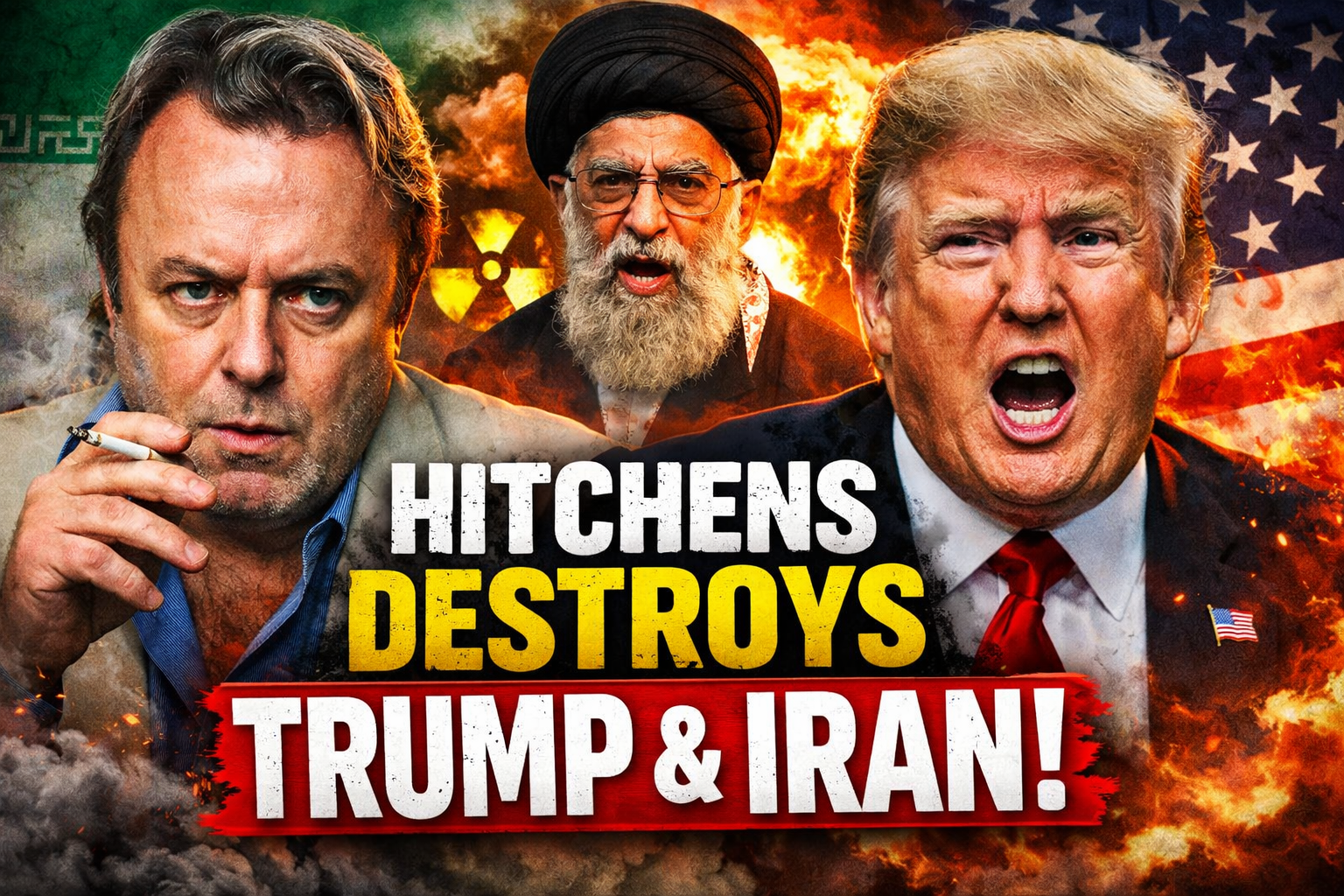
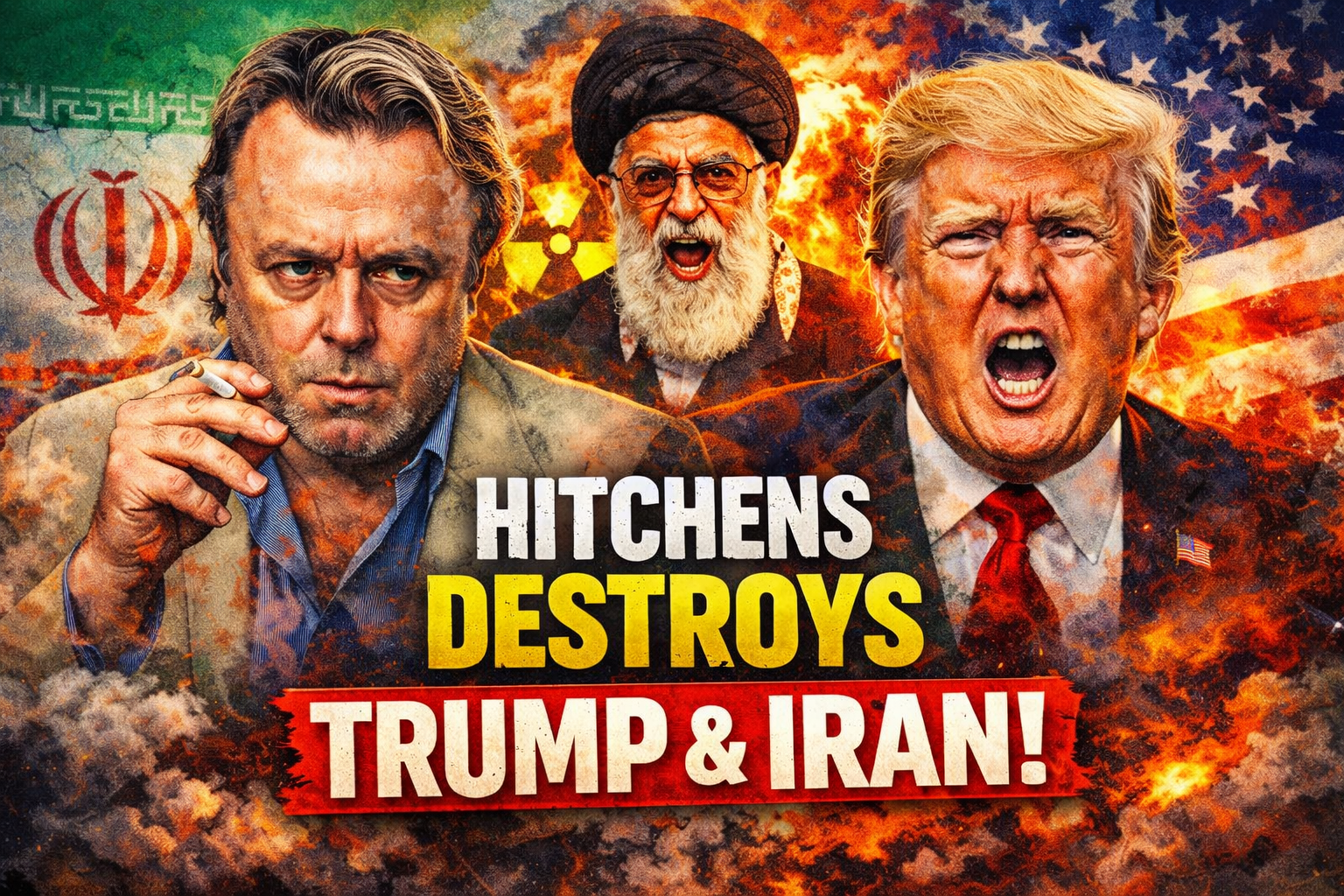
What would Christopher Hitchens say about Donald Trump and Iran? A sharp, provocative analysis in Hitchens’ style—challenging both power and hypocrisy.

A Question That Makes Everyone Uncomfortable
What happens when a theocratic regime obsessed with divine authority collides with a political figure obsessed with personal power?
If Christopher Hitchens were alive today, he would not hesitate. He would not pick a side. He would dismantle both.
And that is precisely what makes this question so dangerous — and so necessary.
Because in a world addicted to choosing sides, Hitchens represented something far rarer: the courage to reject false choices altogether.
Hitchens’ View on Iran: The Danger of Theocracy
Let us begin where Hitchens would insist we begin: with clarity.
The Islamic Republic of Iran is not simply another geopolitical actor. It is, at its core, a theocratic state — one where political power is inseparable from religious authority.
For Hitchens, this was not just problematic. It was intolerable.
A government that claims legitimacy from God places itself beyond criticism. It transforms disagreement into blasphemy and opposition into heresy.
In such a system:
- Freedom becomes conditional
- Truth becomes controlled
- Dissent becomes dangerous
Hitchens consistently warned that a regime like Iran, if equipped with nuclear capability, would represent something unprecedented — not just power, but ideological absolutism armed with modern weapons.
This is not mere politics.
It is belief weaponized.
Trump Through a Hitchens Lens: Power Without Intellectual Discipline
Now, let us turn to Donald Trump.
Hitchens was never impressed by populism that lacked intellectual substance. And Trump, in this framework, would present a different — but equally troubling — problem.
Not dogma, but impulsiveness.
Trump’s approach to Iran has often appeared inconsistent:
- Threats of military action
- Sudden openness to negotiation
- Contradictory messaging within short timeframes
To a Hitchensian mind, this is not strategy.
It is performance.
And when performance intersects with global conflict, the consequences are not rhetorical — they are real.
Unlike Iran’s rigid ideology, Trump represents something more chaotic:
a politics driven by attention rather than principle.
And unpredictability, in matters of war, is not strength.
It is danger disguised as confidence.
The Core Conflict: Ideology vs. Instability
What makes the Trump–Iran dynamic so uniquely volatile is that it is not a clash between good and evil.
It is a clash between:
- Rigid certainty (Iran)
- Volatile inconsistency (Trump)
Iran’s leadership is deeply ideological — oppressive, yes, but internally coherent.
Trump’s leadership, by contrast, often appears reactive, shaped by optics, headlines, and immediate political gain.
Hitchens would likely argue that both contain a fundamental risk:
- One suppresses truth
- The other distorts it
And both, in different ways, erode rational discourse.
Hitchens’ Core Principle: No Immunity from Criticism
Perhaps the most defining feature of Hitchens’ worldview was this:
No individual, no ideology, no government is beyond criticism.
Not Iran.
Not the United States.
Not Trump.
He rejected tribal thinking — the idea that criticizing one side means defending the other.
Instead, he demanded consistency.
If Iran imprisons dissenters, it must be condemned.
If Trump manipulates truth or treats geopolitics as spectacle, that too must be condemned.
Because the moment you excuse one form of dishonesty to oppose another, you abandon intellectual integrity.
The Real Danger: When Narratives Replace Truth
In modern political discourse, especially around conflicts like the U.S. and Iran, narratives often replace nuance.
People are encouraged to choose:
- Freedom vs. tyranny
- Democracy vs. extremism
But Hitchens would interrupt this narrative with a brutal reminder:
Reality is more complicated.
The United States, when acting without consistency or intellectual honesty, risks undermining its own principles.
And Iran, when invoking religion to justify repression, reveals the inherent danger of merging faith with power.
Neither should escape scrutiny.
Why This Debate Still Matters Today
The tension between Trump and Iran is not just about two actors.
It represents a broader question:
Can power exist without accountability — and still be trusted?
Hitchens’ answer would be clear:
No.
Whether power comes from divine authority or democratic election, it must be questioned relentlessly.
Because unchallenged power — in any form — tends toward abuse.
Conclusion: The Hitchens Standard — Truth Over Allegiance
If there is one lesson to take from a Hitchens-style analysis, it is this:
Do not ask which side you are on.
Ask whether the truth is being told.
Iran represents the danger of ideology without freedom.
Trump represents the danger of power without discipline.
And between them lies a world too often forced to choose between flawed options.
Hitchens refused that choice.
And perhaps we should too.