


“Is Islam a Religion of Peace?” — A Question That Shook the Room
What happens when one of the most fearless critics of religion collides head-on with one of the most influential Muslim intellectuals of our time?
You don’t get a polite discussion.
You get intellectual fireworks.
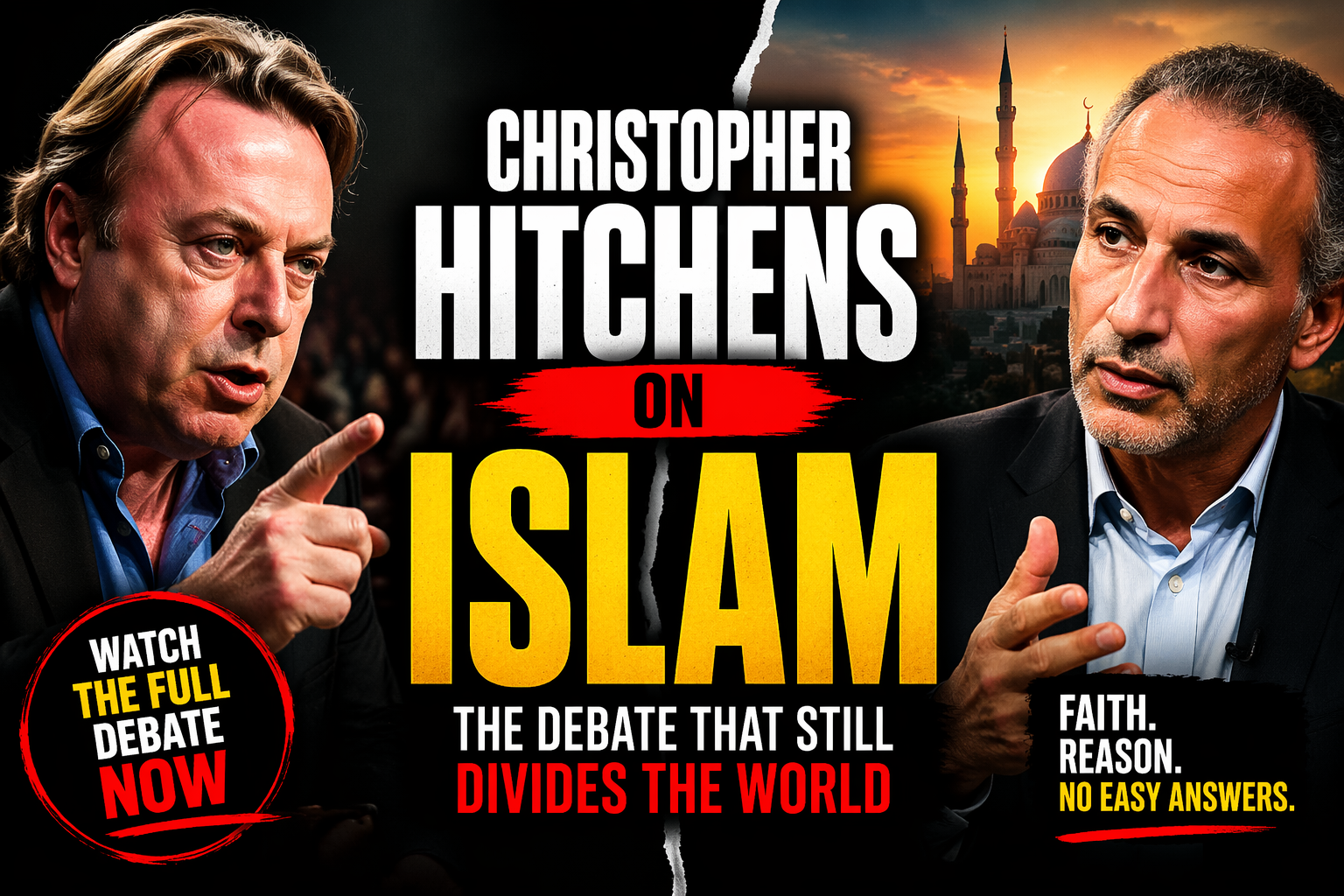
On a charged evening at the 92nd Street Y in New York, Christopher Hitchens and Tariq Ramadan took the stage to debate a question that refuses to fade away:
Is Islam a religion of peace?
The room wasn’t just filled with spectators. It was packed with tension, expectation, and a quiet understanding that what was about to unfold would challenge deeply held beliefs on both sides.
Hitchens Strikes First: Religion Under Fire
From the very beginning, Hitchens did what he did best—he attacked the premise itself.
Not cautiously. Not diplomatically.
But with surgical precision.
He argued that asking whether Islam is peaceful is almost beside the point. To him, all religions share a dangerous flaw: they claim divine authority while being interpreted by fallible humans.
And that, he insisted, is where the danger begins.
Hitchens didn’t merely criticize Islam. He broadened the battlefield, placing religion itself on trial. His argument was rooted in a stark worldview:
- Religion can legitimize violence by framing it as sacred duty
- It discourages skepticism by elevating faith above reason
- It often resists progress, especially in areas like women’s rights and freedom of expression
He invoked history—not as distant memory, but as evidence still bleeding into the present.
To Hitchens, religion was not just an outdated idea.
It was, in his words, a system that can become “totalitarian in intent.”
And Islam, he argued, is not immune to that danger.
Ramadan Responds: Context, Complexity, and Misunderstanding
If Hitchens was fire, Ramadan was water.
Measured. Calm. Controlled.
But make no mistake—his response was no less powerful.
Ramadan rejected the oversimplification of reducing Islam to violence. Instead, he reframed the debate entirely:
No religion is inherently violent. People are.
He acknowledged the uncomfortable realities—conflicts, extremism, and political misuse of Islam—but insisted these are distortions, not definitions.
According to Ramadan:
- Islam contains ethical teachings rooted in compassion and justice
- Violent interpretations arise from political agendas, not core doctrine
- The same scriptures can inspire peace or conflict, depending on interpretation
He challenged the audience to confront a deeper question:
Are we judging Islam fairly—or are we projecting fear shaped by global events?
Where Hitchens saw a pattern, Ramadan saw a misunderstanding.
The Real Battle: Ideas vs Interpretation
At its core, this debate wasn’t just about Islam.
It was about how we understand belief itself.
Hitchens argued that ideas—especially religious ones—must be held accountable for their consequences. If a belief system repeatedly correlates with oppression or violence, then it must be questioned at its root.
Ramadan pushed back, insisting that no idea exists in a vacuum. Religion, he argued, is lived through people, shaped by culture, politics, and history.
This created a fundamental divide:
- Hitchens: The problem is the doctrine
- Ramadan: The problem is the interpretation
Neither backed down.
Neither conceded ground.
And that’s what made the debate unforgettable.
Politics Enters the Arena
As the discussion deepened, another layer emerged—politics.
Both speakers agreed on one thing:
Religion does not operate in isolation.
But they diverged sharply on how that interaction works.
Hitchens argued that religion often fuels political extremism by offering absolute truths that cannot be challenged. In his view, when belief becomes unquestionable, it becomes dangerous.
Ramadan countered that political powers frequently exploit religion to serve their own agendas. Strip away the politics, he suggested, and what remains is not violence—but spirituality.
This wasn’t just a disagreement.
It was a collision of worldviews.
A Debate That Refuses to Die
Years have passed since that night, but the question still lingers—perhaps louder than ever.
In a world shaped by:
- Ongoing conflicts in the Middle East
- Debates over free speech and religious sensitivity
- Rising tensions around identity and integration
…the clash between Hitchens and Ramadan feels less like history and more like prophecy.
Because the truth is uncomfortable:
There is no simple answer.
Islam, like any major religion, is not a monolith. It is vast, diverse, and interpreted in countless ways.
But neither can we ignore the realities that Hitchens pointed out—the moments when belief, in any form, becomes a shield for harm.
The Unanswered Question
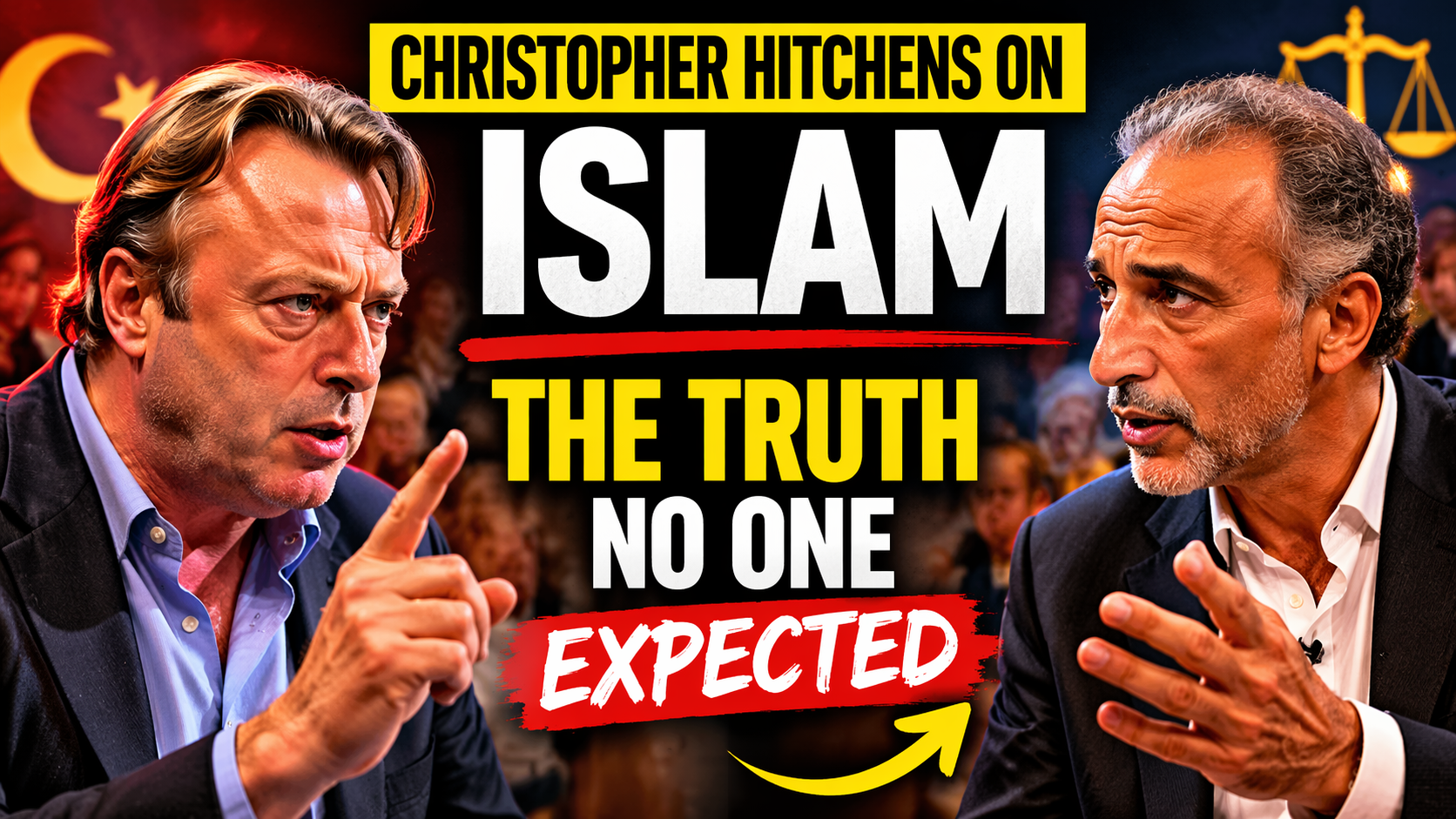
So, is Islam a religion of peace?
Hitchens would say the question is flawed.
Ramadan would say the answer depends on us.
And perhaps that’s the real takeaway.
This debate wasn’t about proving one side right.
It was about forcing us to think—deeply, critically, and uncomfortably.
Because in the end, the most dangerous thing isn’t religion.
And it isn’t criticism either.
It’s the refusal to question anything at all.
Why This Debate Still Matters Today
In the age of viral opinions and algorithm-driven outrage, nuanced discussions are rare.
But this debate reminds us of something essential:
Complex problems demand complex thinking.
Hitchens challenged blind faith.
Ramadan challenged blind criticism.
And somewhere between those two extremes lies a space we rarely occupy—one where ideas are examined, not weaponized.
Final Thought: The Mirror We Avoid
The question “Is Islam a religion of peace?” may never have a definitive answer.
But perhaps it was never really about Islam alone.
Perhaps it was always about us—
our fears, our biases, and our willingness to confront them.
Because every belief system, religious or not, becomes what its followers make of it.
And that responsibility?
That belongs to no god.
It belongs to us.
Watch Full Video: