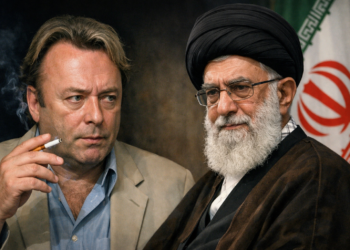


Christopher Hitchens, that inimitable enfant terrible of public discourse, rarely minced words. His general polemic against all monotheisms was famously encapsulated in his incendiary declaration, ‘Religion poisons everything.’ Yet, amidst his broadsides against faith, Islam for Hitchens presented a uniquely compelling and, he often argued, a uniquely dangerous challenge. It was a subject he approached not with the manufactured ‘cultural sensitivity’ so fashionable in polite society, but with the unvarnished intellectual rigor and scathing wit that defined his career. He sought not to understand Islam on its own terms, but to dissect it under the unforgiving light of reason, history, and human rights, stripping away every euphemism and every concession granted by the squeamish or the naive. This was a critique forged in the crucible of intellectual honesty, utterly devoid of the niceties that often dilute serious scrutiny, a stance that made him both revered and reviled, but never ignored.

The Flimsy Foundations: Muhammad, The Quran, and Early Caliphates
Muhammad as ‘Cult Leader’
Hitchens harbored a profound historical skepticism towards the very genesis of Islam, dismissing Muhammad not as a divinely inspired prophet but as a shrewd, opportunistic ‘cult leader.’ He meticulously picked apart the conventional narrative, pointing to Muhammad’s early life and subsequent ‘revelations’ as a convenient means to consolidate power, justify his conquests, and enforce a rigid social and political order. For Hitchens, the claim to divine authority was merely a thinly veiled pretext for personal ambition and the establishment of a militant political ideology masquerading as faith. He found little in Muhammad’s character or actions that suggested spiritual enlightenment, but rather the unmistakable hallmarks of a charismatic yet ruthless strongman who leveraged nascent religious fervor to achieve temporal dominance. The stories of raiding caravans, executing critics, and marrying child brides were, to Hitchens, not sacred acts but empirical evidence of a worldly, all-too-human enterprise.
The Quran’s Literary Merits (or Lack Thereof)
To suggest the Quran possessed literary merit in the classical sense was, for Hitchens, an exercise in self-deception or willful ignorance. He scoffed at claims of its inimitability, viewing its internal contradictions, repetitions, and frequently prosaic prose as hardly the work of divine perfection. Beyond aesthetics, Hitchens subjected its ethical pronouncements to relentless scrutiny, finding them riddled with precepts that offended modern sensibilities, particularly regarding women, non-believers, and matters of justice. The very idea of divine authorship for such a text was, in his estimation, an insult to human intelligence, a demand for intellectual surrender rather than an invitation to profound truth. He saw it not as a guide to universal morality but as a codified legal and social system perfectly suited to the tribal, expansionist milieu in which it emerged, subsequently ossified and imposed across diverse cultures.
The ‘Conquest by the Sword’
Hitchens was unapologetic in his assertion that Islam’s early expansion was primarily a ‘conquest by the sword.’ He frequently cited historical accounts detailing the aggressive, proselytizing nature of early Islamic armies, dismissing the often-romanticized notion of peaceful conversion. For him, the relentless march of the Caliphates across North Africa, the Middle East, and into Europe was not merely an accident of history or a series of defensive maneuvers, but a testament to an inherently expansionist doctrine woven into the fabric of the faith itself. The very concept of Dar al-Islam (the House of Islam) versus Dar al-Harb (the House of War) provided the ideological framework for perpetual engagement and eventual subjugation of all non-Islamic territories. This historical reality, he argued, was crucial to understanding the militant strain within Islam that persists to this day, a strain too often whitewashed by its apologists.
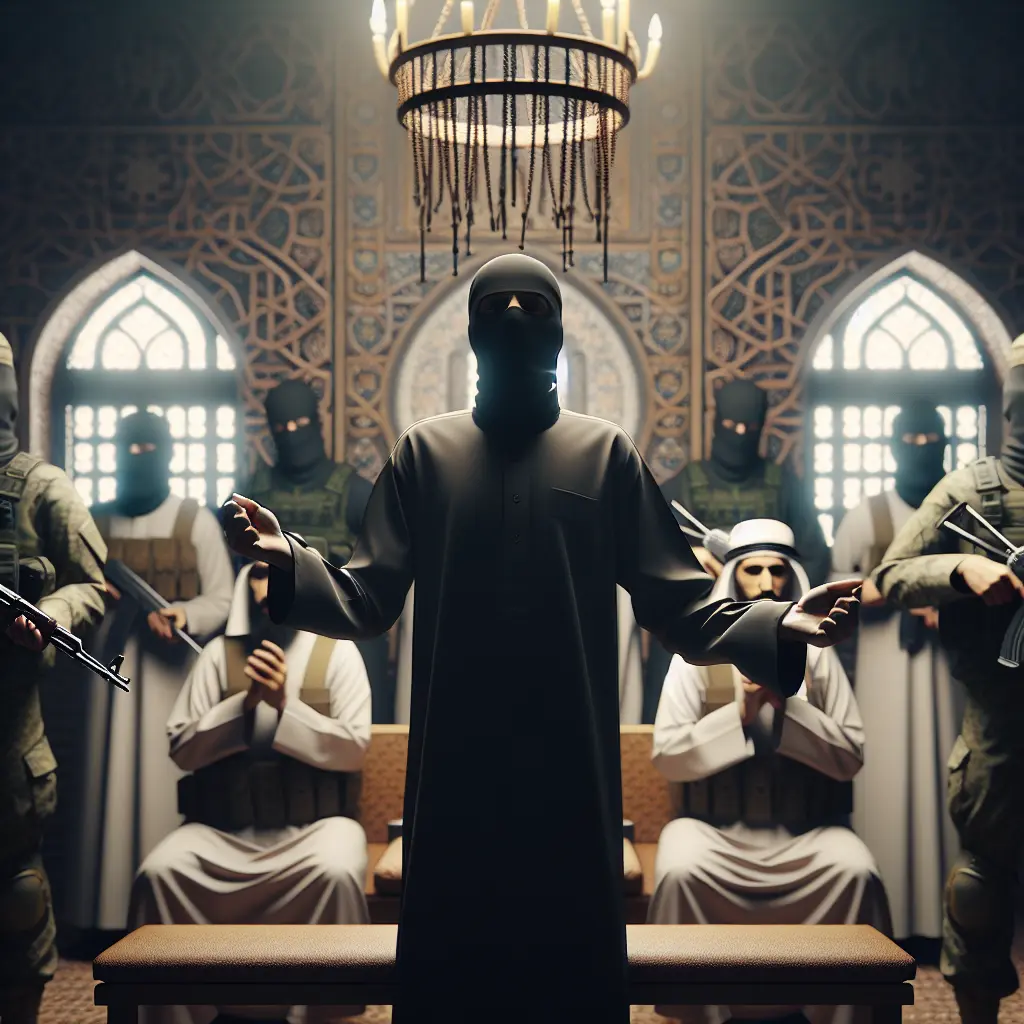
The Theocratic Totalitarian: Sharia, State, and the Suppression of Thought
The Inseparable Bond: Why ‘Secular Islam’ is a Contradiction
The notion of ‘secular Islam’ was, for Christopher Hitchens, an oxymoron of the highest order, a comforting delusion peddled by those unwilling to face the stark reality of Islamic doctrine. He argued vehemently that the very foundations of Islam preclude the separation of mosque and state. Unlike other monotheisms that evolved or were forced to cede temporal authority, Islam, from its inception, presented itself as a comprehensive legal, political, and social system, with Allah’s law (Sharia) intended to govern every aspect of human life. The Prophet Muhammad was not merely a spiritual leader but a military commander, a legislator, and a head of state. To attempt to cordon off a ‘secular’ sphere within such an all-encompassing ideology was, to Hitchens, to fundamentally misunderstand or deliberately misrepresent its nature. He saw any talk of ‘secular Islam’ as wishful thinking, a desperate attempt to impose Western liberal ideals onto a system explicitly designed to resist them.
Sharia Law as ‘Moral Barbarism’
Hitchens branded Sharia Law as nothing short of ‘moral barbarism.’ He reserved particular scorn for its archaic and brutal penal codes – the capital punishment for apostasy and blasphemy, the stoning for adultery, the amputation for theft, the often-discriminatory rules of evidence. For Hitchens, these were not divine mandates but relics of an unforgiving desert society, codified into an immutable legal system that demonstrably violates every principle of universal human rights. He frequently highlighted its devastating impact on women, minorities, and homosexuals, pointing to their systemic subjugation, restricted freedoms, and often violent oppression under Sharia. The defense of such laws by religious adherents or their apologists was, for Hitchens, a direct affront to enlightenment values and a testament to the chilling power of dogma to override basic human decency.
From ‘Dar al-Islam’ to ‘Dar al-Harb’: The Inherent Expansionist Tendencies
The conceptual division of the world into Dar al-Islam (the abode of Islam) and Dar al-Harb (the abode of war) was, for Hitchens, irrefutable evidence of Islam’s inherent expansionist and supremacist tendencies. This wasn’t merely a theological abstraction but a historical and ongoing imperative to extend Islamic rule and law globally. He argued that this doctrine fuels a perpetual state of ideological conflict with non-Islamic societies, providing a theological justification for jihad, not merely as an internal spiritual struggle, but as an external military and political enterprise. For Hitchens, anyone who dismissed these foundational concepts as marginal or obsolete was either dangerously ignorant or deliberately downplaying the ideological underpinnings of Islamic supremacism that continue to inspire movements and individuals across the globe.
Blasphemy and the Banality of Offence: Free Speech Under Siege
The Danish Cartoons Controversy and its Aftermath
The Danish Cartoons Controversy of 2005-2006, with its chilling global repercussions, crystallized for Hitchens the absolute necessity of an unwavering defense of free speech against religious intimidation. He saw the violent protests, death threats, and boycotts not as legitimate expressions of grievance but as a direct assault on the fundamental right to criticize, lampoon, or even offend religious sensibilities. His stance was uncompromising: if a religion cannot withstand caricature, it speaks volumes not about the cartoonist, but about the insecurity and fragility of the faith itself. He argued that capitulation to such threats was a dangerous precedent, granting a religious veto over expression that would inevitably lead to further demands and a broader chilling effect on speech.
‘Respect’ vs. ‘Critique’: His Rejection of Immunity for Beliefs
Hitchens utterly rejected the notion that religious beliefs, particularly Islamic ones, were somehow immune from ridicule or severe scrutiny. The demand for ‘respect’ in this context was, for him, a thinly veiled demand for immunity from criticism, a rhetorical weapon used to silence dissent. He argued passionately that ideas, including religious ideas, must be subjected to the most rigorous intellectual challenge, satire, and even contempt if they are found wanting. To grant special protection to belief systems, especially those that advocate for the oppression of others or the suppression of thought, was not only intellectually dishonest but morally bankrupt. True respect, he contended, was earned by an idea’s coherence and ethical merit, not by its antiquity or its adherents’ piety.
The Rushdie Affair Revisited: How it Presaged the Dangers of Appeasement
For Hitchens, the Salman Rushdie affair of 1989, sparked by Khomeini’s fatwa against The Satanic Verses, was a prophetic moment that presaged the dangers of appeasement and self-censorship in the face of Islamic threats. He lamented the initial lukewarm response from many Western governments and literary figures, seeing it as a moral failing that emboldened religious extremists. He passionately defended Rushdie’s right to artistic expression, regardless of whether one liked the novel, understanding that the core issue was not literary merit but the right to write and publish freely without fear of assassination. The affair, he argued, taught the West a bitter lesson: that surrendering intellectual ground to religious fanaticism only invites further demands and establishes a dangerous precedent where fear dictates cultural output.
The Apologists and Enablers: ‘Moderate Islam’ as a Dangerous Illusion
The ‘No True Scotsman’ Fallacy
Hitchens had little patience for attempts to cordon off ‘radical Islam’ from the core tenets of the faith, dismissing such arguments as a variation of the ‘No True Scotsman’ fallacy. He vehemently rejected the idea that extremists were somehow misinterpreting or hijacking a fundamentally peaceful religion. Instead, he argued that the violent, totalitarian elements of Islamism derive directly from foundational texts, historical precedents, and mainstream theological interpretations. To claim that figures like al-Qaeda or ISIS were not ‘true Muslims’ was, in his view, a disingenuous semantic maneuver designed to deflect legitimate criticism from the religion itself. He insisted on a direct, unflinching examination of what the faith actually teaches and has historically inspired, rather than what its apologetic adherents wished it taught.
Western Complacency: His Scorn for Rationalizing Extremism
Hitchens reserved some of his sharpest scorn for those in the West who sought to excuse, rationalize, or romanticize Islamic extremism. He lambasted academics, politicians, and media figures who attributed terrorism solely to socio-economic factors, colonialism, or Western foreign policy, thereby absolving Islamic ideology of its inherent culpability. Such ‘cultural relativism,’ he argued, was not only intellectually lazy but morally reprehensible, effectively infantilizing perpetrators and denying the genuine ideological motivations behind their actions. He saw it as a dangerous form of appeasement, a failure of nerve that prevented an honest confrontation with a profoundly illiberal and often violent ideology.
The ‘Culture of Victimhood’: How Islamic Identity Leverages Grievance
One of Hitchens’ recurring critiques was of what he perceived as a pervasive ‘culture of victimhood’ within certain strands of Islamic identity. He observed how grievances, both real and imagined, were frequently leveraged not to seek justice or reconciliation, but to deflect criticism, demand concessions, and even justify violent acts. This narrative, he argued, often served as an unassailable shield against scrutiny, transforming any critical examination into an act of ‘Islamophobia’ or ‘racism.’ For Hitchens, this tactic was a cynical manipulation, allowing proponents of reactionary ideas to evade responsibility and exploit the well-meaning but often misguided sensitivities of liberal Western societies.
From 9/11 to the ‘War on Terror’: Confronting the Jihadist Threat
9/11 as a Direct Manifestation: Not an Aberration
For Christopher Hitchens, the horrific attacks of September 11, 2001, were not an aberration or a tragic misunderstanding, but a direct and logical manifestation of a particular strain of Islamic doctrine. He famously asserted that the terrorists were not “fanatics,” but rather “believers” who were acting precisely upon the dictates of their faith concerning jihad, martyrdom, and the subjugation of the infidel. He rejected any attempt to divorce the attacks from their ideological roots, arguing that to do so was to deliberately blind oneself to the enemy’s stated motivations. 9/11, in his view, was a stark, bloody confirmation of Islamism’s totalitarian ambitions, demonstrating its willingness to use mass murder in pursuit of its theo-political goals.
The ‘New Totalitarianism’: Comparing Islamism to Fascism and Communism
Hitchens was among the first and most vocal to articulate Islamism as a ‘new totalitarianism,’ a formidable ideological threat comparable in its scope and danger to the fascism and communism of the 20th century. He identified the common threads: the cult of personality, the utopian promises, the demand for absolute ideological conformity, the relentless drive for expansion, the demonization of dissent, and the ultimate contempt for individual liberty. For him, the struggle against Islamism was not merely a military endeavor but an ideological war, a clash between enlightenment values and a new form of dark age despotism. To understand Islamism simply as a series of disconnected terror cells, rather than a cohesive, global movement with a distinct ideology, was to fatally underestimate the nature of the enemy.
A ‘War of Ideas’ and Necessity of Confrontation
Given his analysis, Hitchens passionately argued for a ‘war of ideas’ and the absolute necessity of confrontation, both intellectual and, when necessary, military. He staunchly supported interventions, particularly in Afghanistan and Iraq, not as exercises in nation-building, but as a recognition of an ideological enemy that required direct engagement. He believed that complacency or appeasement would only embolden the jihadist threat, and that the defense of liberal values demanded robust and unapologetic action. This confrontation, he maintained, was not against a people or a culture in totality, but against an ideology that threatened the very foundations of human liberty and rational thought. His stance on these conflicts, controversial as it was, stemmed directly from his profound understanding of and disgust for totalitarian systems, whether secular or theocratic.
Conclusion: The Unyielding Voice of Dissent
Christopher Hitchens’s enduring contribution to the debate on Islam was his uncompromising, often provocative, refusal to grant any quarter to dogma, particularly when it encroached upon human rights and intellectual freedom. He was the quintessential iconoclast, armed with a vast knowledge of history, a formidable intellect, and a lexicon of devastating wit. He caused immense discomfort, not by accident, but by design, believing it utterly necessary to shatter polite fictions and confront uncomfortable truths. His legacy is a resounding call for intellectual rigor, a staunch defense of absolute free speech, and above all, moral courage in the face of dogma. He taught us that some ideas are not merely wrong, but actively pernicious, and that to remain silent or to feign ‘respect’ for such ideas is to betray the very principles of enlightenment. His voice, unyielding and unafraid, continues to challenge, provoke, and remind us that the examination of faith, especially when it demands submission, is not merely an academic exercise, but a vital defense of civilization itself.