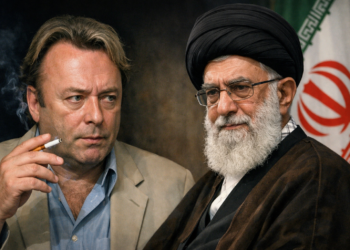


The intellectual arena has, from time to time, been graced by figures whose very presence ignites fervent debate and reshapes public discourse. Christopher Hitchens and Jordan Peterson are two such titans, though separated by a generation and a distinct divergence in their primary intellectual battlegrounds. Hitchens, the indefatigable polemicist, a scion of the Enlightenment tradition, wielded reason and skepticism like a rapier against the sacred cows of religion, dogma, and political totalitarianism. Peterson, the clinical psychologist turned cultural commentator, navigates the treacherous waters of meaning, myth, and the psychological necessity of order in a postmodern age. This hypothetical confrontation isn’t merely an academic exercise; it’s a compelling thought experiment that probes the very foundations of Western thought, morality, and societal structure. Their distinct intellectual personas—Hitchens’ acerbic wit and encyclopedic knowledge contrasted with Peterson’s profound, often challenging, explorations of archetypes and responsibility—set the stage for a fascinating intellectual clash. The core intellectual friction between them can be broadly characterized as reason versus meaning, deconstruction versus reconstruction. Hitchens sought to dismantle illusions and superstitions, while Peterson endeavors to rebuild a coherent framework for individual and societal existence from the wreckage of modern ideologies. This essay aims to explore the points of convergence, however surprising, and the irreconcilable divergences that define the intellectual landscape these two figures represent.

Shared Ground (If Any): Acknowledging the Unlikely Overlaps
Critique of Ideological Overreach
Despite their vastly different philosophical starting points and preferred targets, both Hitchens and Peterson expressed profound disdain for ideological overreach, albeit from different angles. Hitchens spent much of his career meticulously dissecting and exposing the horrors of totalitarianism, whether it manifested in Stalinist communism, fascism, or theocratic fundamentalism. His critique was rooted in a deep humanism and an unwavering commitment to individual liberty, seeing all forms of totalizing ideology as inherently dehumanizing and oppressive. He understood the insidious allure of utopian promises that invariably led to gulags and genocides. Peterson, on the other hand, frequently directs his critique towards what he perceives as the excesses of postmodernism, radical identity politics, and specific interpretations of neo-Marxism within contemporary academia and culture. He argues that these ideologies, in their pursuit of equality of outcome and deconstruction of traditional hierarchies, risk fostering resentment, dissolving meaningful distinctions, and ultimately leading to a new form of oppressive collectivism. Both men recognize the inherent danger when an abstract idea gains absolute dominion over individual thought and action, transforming individuals into mere cogs in a larger, destructive machine.
Emphasis on Individual Responsibility
The concept of individual responsibility stands as another surprising, yet fundamental, commonality between these two thinkers, although their framing of it differs significantly. Hitchens, ever the advocate for personal autonomy and rational agency, implicitly demanded that individuals take responsibility for their beliefs and actions, critically examining dogma and resisting intellectual laziness. He believed that the unexamined life was not worth living, and that individuals had a moral duty to think for themselves, to challenge authority, and to stand up for their convictions, even at great personal cost. Peterson, more explicitly and perhaps more famously, centers individual responsibility as the cornerstone of a meaningful life and a well-ordered society. His exhortations to “clean your room,” to “pick up your cross,” and to strive for competence and truth are direct calls to take ownership of one’s life, face challenges, and bear the burden of being. For Peterson, the failure to assume responsibility leads to resentment, chaos, and ultimately, societal decay. While Hitchens stressed intellectual responsibility and resisting external impositions, Peterson emphasizes personal agency in the face of internal and external chaos.
The Value of Free Speech and Open, Robust Debate
Few intellectuals have championed free speech as vociferously and consistently as Christopher Hitchens. He saw it not merely as a legal right but as the indispensable oxygen of a healthy society and the only reliable mechanism for discovering truth and exposing falsehood. His willingness to debate anyone, anywhere, on any topic, no matter how sacred, exemplified his commitment to the unfettered exchange of ideas. He believed that even vile speech must be confronted with better speech, not censorship. Jordan Peterson, too, has become a prominent defender of free speech, particularly in the context of academic freedom and against what he perceives as enforced ideological conformity. His initial rise to widespread prominence was largely due to his principled stand against compelled speech and his subsequent debates on controversial topics. Both men understand that the free expression of diverse, even unpopular, ideas is vital for intellectual progress and for preventing the ossification of thought into dogma. They shared a conviction that truth emerges not from silence or suppression, but from the brutal yet necessary crucible of open, robust, and often uncomfortable debate.
Disdain for Intellectual Laziness and Unexamined Beliefs
A unifying thread through the work of both Hitchens and Peterson is a palpable scorn for intellectual laziness and the comfort of unexamined beliefs. Hitchens relentlessly attacked what he called “faith-based thinking,” exposing the inherent contradictions and moral failings of religious dogma and political expediency alike. He saw intellectual cowardice and the refusal to apply critical scrutiny to one’s cherished convictions as a grave sin, contributing to ignorance and oppression. His razor-sharp intellect and vast erudition were deployed to dismantle any argument that relied on sentimentality, tradition without reason, or a simple unwillingness to think hard. Peterson, for his part, consistently challenges his audience to grapple with profound existential questions, to confront the shadows within themselves, and to articulate their beliefs with precision and courage. He views the adoption of shallow, unexamined ideologies, particularly those that offer easy answers or scapegoats, as a path to personal and societal destruction. Both men demand rigor, self-reflection, and a courageous engagement with the complexities of existence, rejecting simplistic platitudes and the refuge of intellectual complacency.

The Chasm of Belief: Religion, Mythology, and Truth
Hitchens’ Atheism: The ‘New Atheist’ Stance, Critique of Faith, the Problem of Evil
Christopher Hitchens was arguably the most eloquent and unyielding champion of the ‘New Atheism,’ a movement that advocated not merely for skepticism, but for a proactive and often polemical critique of religion itself. For Hitchens, faith was not a virtue but a profound intellectual vice, a wilful suspension of critical faculties in the face of insufficient, often contradictory, evidence. He famously asserted that “what can be asserted without evidence can be dismissed without evidence.” His critique extended beyond the intellectual failings of religion to its tangible harms: war, oppression, the subjugation of women, the abuse of children, and the stunting of human potential. He viewed the Abrahamic religions in particular as inherently totalitarian, demanding absolute submission to an arbitrary divine will, fostering fear and intolerance. The problem of evil was, for Hitchens, an insurmountable logical hurdle for any benevolent, omnipotent deity, rendering the concept of God not just improbable but morally monstrous. He rejected the notion that religion was a necessary comfort or moral guide, arguing instead that it poisoned everything, replacing genuine ethics with superstitious obedience and hindering humanity’s progress towards a truly rational and compassionate society.
Peterson’s Engagement with Religion: Psychological Utility of Myth, Archetypes, the ‘Logos’
Jordan Peterson’s engagement with religion stands in stark contrast to Hitchens’. While not professing orthodox religious belief in the conventional sense, Peterson is deeply immersed in the psychological utility of religious myth and narrative. For him, religious stories, particularly those found in the Bible, are not merely historical accounts or literal truths, but rather profound repositories of foundational wisdom accumulated over millennia. He sees them as maps for navigating the chaotic complexities of human existence, revealing enduring archetypes and moral imperatives essential for individual and societal well-being. The concept of the ‘logos’—often translated as word, reason, or meaning—is central to his interpretation, representing the principle of courageous truth-telling and the ordering force that brings cosmos out of chaos. Peterson argues that these narratives provide the necessary framework for meaning, guiding individuals to confront suffering, strive for competence, and articulate their highest values. He posits that even if not literally true, their pragmatic utility for psychological and social flourishing is undeniable, providing a structure without which societies risk descending into nihilism and disarray.
Direct Conflict: The Role of Religion in Society – Poison vs. Necessary Framework
Here lies the clearest and most irreconcilable chasm between the two. For Hitchens, religion, in its various forms, was a historical and contemporary poison: a source of conflict, irrationality, and an impediment to human freedom and scientific advancement. He saw its influence in public life as an unmitigated disaster, advocating for a strictly secular society where reason alone would guide human affairs. He would likely view Peterson’s search for psychological utility in myth as a sophisticated form of special pleading, a desperate attempt to find comfort in ancient superstitions rather than facing the stark, beautiful indifference of the universe with courage and scientific rigor. Peterson, conversely, views religion (or at least the underlying mythological structures it embodies) as an absolutely necessary framework for psychological order, individual meaning, and societal cohesion. He fears that without these deep-seated narratives and moral guidelines, humanity is left adrift in a sea of relativism and nihilism, vulnerable to destructive ideologies and existential despair. He would likely perceive Hitchens’ secular project as a dangerous attempt to throw out the baby with the bathwater, dismantling the very structures that provide meaning and protect against chaos.
The Definition of ‘Truth’: Empirical Verification vs. Pragmatic Utility for Life
Their divergent views on religion are rooted in fundamentally different understandings of ‘truth.’ For Hitchens, truth was primarily derived from empirical verification, logical consistency, and the scientific method. He was a staunch empiricist and rationalist, believing that claims about reality must withstand rigorous scrutiny and be falsifiable. Truth was objective, discoverable, and existed independently of human desire or comfort. Any belief system, religious or otherwise, that failed to meet these criteria was, by definition, false or at best unproven and therefore unworthy of acceptance. Peterson, while not rejecting empirical truth, often posits a more pragmatic or “functional” definition of truth. For him, something can be “true” if it facilitates survival, well-being, and adaptation, particularly in the psychological and social realms. The stories and archetypes of religion, while perhaps not literally factual, contain “truths” in the sense that they provide effective guidance for navigating the complexities of life, fostering meaning, and ensuring the continuity of culture. This pragmatic truth is not necessarily about objective reality but about what works for human flourishing, leading to a profound disagreement about the very nature of what it means for something to be ‘true’.
Political Landscape: From Ideology to Order
Hitchens’ Political Positions: Anti-Totalitarianism, Democratic Socialism, Critique of American Foreign Policy
Christopher Hitchens’ political journey was complex and often contradictory, marked by a fierce independence of thought. Initially identifying as a Trotskyist and democratic socialist, he remained a lifelong anti-totalitarian, equally critical of both far-left and far-right authoritarian regimes. His early work meticulously exposed the hypocrisy and brutality of figures like Mother Teresa and Henry Kissinger, and he maintained a deep skepticism towards all forms of entrenched power. Post-9/11, his political stance shifted notably, becoming a vocal advocate for the war in Iraq, a position that alienated many of his former left-wing allies. This shift, however, was consistent with his anti-totalitarian conviction, as he viewed radical Islamism as a new, potent form of totalitarian threat that demanded robust military response. Throughout his career, he emphasized secularism as a cornerstone of genuine democracy and fought against the encroachment of religious dogma into public policy, a constant theme regardless of his changing alliances on foreign policy. His critiques were always sharp, often acerbic, targeting intellectual dishonesty wherever he perceived it, regardless of the political affiliation of its proponents.
Peterson’s Political Discourse: Critique of ‘Woke’ Culture, Postmodern Neo-Marxism, Defense of Western Civilization
Jordan Peterson emerged as a significant political voice largely through his critique of what he terms ‘woke’ culture and ‘postmodern neo-Marxism.’ He argues that these contemporary ideologies, particularly prevalent in academia and certain activist circles, undermine individual achievement, erode traditional values, and promote a dangerous form of collective identity politics. Peterson contends that these movements falsely equate equality of outcome with justice, leading to resentment and the demonization of successful individuals and established hierarchies. He frames the constant deconstruction of societal norms and the emphasis on group identity as destructive forces that threaten the stability and coherence of Western civilization, which he sees as built upon principles of individual sovereignty, free speech, and Judeo-Christian ethics. His defense of Western civilization is not uncritical but rather an affirmation of its historical successes in fostering prosperity and individual liberty, often arguing for a return to its foundational principles. His political discourse is deeply intertwined with his psychological theories, viewing these cultural shifts as symptoms of a deeper existential crisis, a failure to find meaning, and a descent into chaotic resentment.
Points of Divergence: The Nature of Societal Threats, The Role of Tradition vs. Radical Change, Equality
The points of divergence in their political outlooks are substantial. Hitchens, even in his later phase, focused on tangible, often state-sponsored or religiously-fueled, totalitarian threats to liberty, emphasizing the struggle against external oppressors. Peterson, conversely, sees the primary threat as emanating from within Western culture itself, from intellectual currents that he believes are undermining its internal coherence and strength. Their views on the role of tradition also differ: Hitchens, while appreciative of historical reason, was fundamentally a radical critic, willing to tear down anything he deemed irrational or oppressive, irrespective of its age. Peterson, while acknowledging the need for adaptation, places immense value on tradition and established hierarchies as sources of stability and wisdom, fearing the chaotic consequences of radical, ideologically driven change. Furthermore, their approaches to equality diverge: Hitchens, from his socialist roots, had a clear concern for economic and social justice, even if his later foreign policy positions sometimes overshadowed this. Peterson, while not opposing equality of opportunity, strongly emphasizes natural differences and competence hierarchies, cautioning against the dangers of enforced equality of outcome and its potential to breed resentment and inefficiency.
The Ideal Societal Structure: Meritocracy vs. a More Egalitarian Vision
Building on these divergences, their visions for an ideal societal structure are quite distinct. Peterson implicitly, and often explicitly, champions a form of meritocracy, where individuals are encouraged to develop their competence, take responsibility, and rise through hierarchies based on skill and achievement. He views such hierarchies as natural, necessary, and even beneficial, providing order and motivation. While acknowledging their imperfections, he sees the constant attack on such structures as detrimental to progress and stability. His focus is on the individual’s journey towards competence and truth, believing that a society composed of well-adjusted, responsible individuals will naturally be a well-ordered one. Hitchens, while valuing individual liberty and intellectual merit, retained elements of his earlier democratic socialist leanings, implying a greater concern for distributive justice and systemic inequalities. His focus would be less on reinforcing existing hierarchies and more on dismantling structures of power and privilege that he viewed as inherently unjust or irrational. While both valued individual freedom, Hitchens would likely lean towards a more egalitarian vision, whereas Peterson would prioritize the functional effectiveness and stability provided by meritocratic hierarchies.

The Nature of Meaning and Purpose: Science, Subjectivity, and Utility
Hitchens’ Empiricism & Rationalism: Truth Derived from Evidence, Logic, and Scientific Method
For Christopher Hitchens, the pursuit of meaning and purpose was inextricably linked to empirical observation, rigorous logic, and the scientific method. He believed that truth was discoverable through rational inquiry and the painstaking accumulation of evidence, not through revelation, intuition, or ancient texts. In a universe devoid of supernatural intervention, meaning was not to be found in divine decrees but created by humanity itself, through our capacity for reason, compassion, and the pursuit of knowledge. He found solace and grandeur in the scientific understanding of the cosmos, embracing the “cold comfort” of a godless universe. His skepticism extended to all unverified claims, and he viewed subjective comfort as a poor substitute for objective reality. For Hitchens, the moral imperative was to confront reality as it is, without illusions, and to build a just and humane society based on verifiable facts and universal human rights, rather than on comforting but ultimately baseless myths. The challenge was not to find pre-ordained meaning, but to forge it authentically through our own actions and reason.
Peterson’s Pragmatic Truth: Truth as that Which Facilitates Survival and Well-being; Hierarchy of Values
Jordan Peterson’s approach to meaning and purpose is deeply rooted in a pragmatic understanding of truth, interwoven with psychology and evolutionary biology. For him, truth is not solely about empirical facts but about what allows human beings to survive, flourish, and manage the existential burdens of life. He often speaks of a “hierarchy of values,” where some truths are more “real” or “higher” because they successfully guide human action and promote well-being over generations. The stories, myths, and religious narratives he analyzes are seen as embodying these pragmatic truths, providing psychological coherence and a blueprint for navigating chaos. The importance of narrative in shaping meaning is paramount for Peterson; he believes that humans are fundamentally story-making creatures, and these stories provide the structure through which we understand ourselves and the world. Meaning is not just found; it is constructed through courageous engagement with the world, the adoption of responsibility, and the articulation of one’s highest values. This involves a constant process of confronting chaos with order, telling the truth, and striving for competence.
Philosophical Clash: Objective vs. Functional Truth; the Pursuit of Meaning in a Godless Universe vs. Meaning as Inherent in Narrative Structures
This section highlights a profound philosophical clash. Hitchens, firmly planted in the Enlightenment tradition, would likely view Peterson’s “pragmatic truth” as a dangerous retreat from objective reality, a concession to human weakness and a veiled attempt to reintroduce superstition under the guise of psychological utility. He would argue that whether a belief “works” is irrelevant to its factual veracity, and that grounding meaning in something other than verifiable truth is intellectually dishonest and ultimately unsustainable. For Hitchens, meaning in a godless universe is forged through conscious human effort and reason, not derived from ancient, non-literal narratives. Peterson, in turn, might argue that Hitchens’ purely empirical and rationalist approach, while valuable in its domain, fails to address the deepest human need for meaning and purpose, leaving individuals vulnerable to nihilism. He would contend that the human mind inherently requires narrative structures to make sense of the world, and that dismissing these structures as “untrue” simply because they lack empirical verification is to misunderstand the very nature of human consciousness and the functional role of belief systems. This fundamental disagreement over the very definition of truth forms the bedrock of their intellectual divide.
Dealing with Suffering: Confronting the Void vs. Finding Solace in Archetypal Wisdom
Their differing approaches to suffering further illuminate their philosophical divergence. Hitchens, with his unflinching rationalism, advocated for confronting the inherent meaninglessness and suffering of existence directly, without the comfort of religious illusion. He believed that accepting the “cold comfort” of a godless universe, and facing its indifference with courage and integrity, was the only honorable and intellectually honest path. Suffering was a fact of life, to be alleviated through human agency, scientific progress, and compassion, not through divine intervention or promises of an afterlife. He would likely view attempts to find solace in archetypal wisdom as a form of self-deception, however well-intentioned. Peterson, conversely, posits that suffering is an inescapable aspect of human existence, but that meaning can be found precisely in the courageous confrontation of that suffering. He encourages individuals to find solace and guidance in the enduring archetypal wisdom embedded in ancient myths and religious narratives, which provide blueprints for navigating hardship, finding strength, and making the ultimate sacrifice. For Peterson, these stories provide a framework for enduring suffering and finding purpose within it, offering a necessary psychological shield against nihilism and despair.
Style and Rhetoric: Swords of Words and Intellectual Armory
Hitchens’ Polemical Elegance: Witty, Scathing, Encyclopedic, Debate-Focused
Christopher Hitchens was a master of the polemical essay and the intellectual debate, renowned for his elegant, yet often scathing, prose. His style was characterized by a potent cocktail of erudition, rapier wit, and a devastating command of rhetoric. He possessed an encyclopedic knowledge across history, literature, philosophy, and politics, which he deployed with formidable precision. His argumentation was debate-focused, designed not just to persuade, but often to dismantle and humiliate his opponents, whom he frequently accused of intellectual sloppiness or moral cowardice. He reveled in intellectual pugilism, rarely missing an opportunity for an ironic turn of phrase or an acerbic aside. His sentences were often long, complex, and grammatically impeccable, yet always crystal clear in their intent to expose hypocrisy or demolish a flawed argument. Reading Hitchens was akin to watching a virtuoso swordsman; every parry and thrust was calculated, graceful, and deadly effective, leaving little doubt about his contempt for fuzzy thinking and unexamined piety.
Peterson’s Prophetic Intensity: Complex, Deep Dives into Mythology/Psychology, Didactic, Challenging
Jordan Peterson’s style and rhetoric are distinctly different, marked by a prophetic intensity and a deep, often labyrinthine, exploration of complex subjects. His discourse frequently involves profound dives into mythology, psychology, and philosophy, weaving together intricate narratives and challenging his audience to think deeply about existential questions. His delivery is often didactic, serving as a teacher and guide, but also highly confrontational, demanding rigorous self-examination from his listeners. Peterson’s language can be dense, employing specialized terminology from Jungian psychology, biblical scholarship, and evolutionary theory. He speaks with a gravity and earnestness that conveys the perceived urgency of his message: that individuals must take responsibility, confront chaos, and find meaning to avoid descent into nihilism. While less overtly witty or ironic than Hitchens, Peterson possesses a compelling magnetism, drawing audiences into his intricate arguments through sheer intellectual force and a palpable concern for the state of the individual and society. His focus is on transformation and construction, guiding listeners towards a path of meaning, rather than the demolition of falsehoods.
Hypothetical Debate Dynamics: Hitchens’ Direct Attacks vs. Peterson’s Layered Arguments
A hypothetical debate between Hitchens and Peterson would be a spectacle of contrasting intellectual styles. Hitchens would likely launch direct, incisive attacks on what he perceives as Peterson’s evasiveness on the literal truth of religious claims, his reliance on myth over empirical fact, and his alleged conflation of psychological utility with objective reality. He would demand clear, unambiguous answers, employing his sharp wit and logical rigor to expose any perceived inconsistencies or appeals to mysticism. Peterson, on the other hand, would likely respond with layered, nuanced arguments, drawing on psychological theory, historical context, and the symbolic interpretation of narratives. He would seek to reframe Hitchens’ empirical challenges within a broader understanding of “truth” as functionally vital for human experience, perhaps accusing Hitchens of a reductionist worldview that fails to grasp the depth of human meaning-making. Hitchens would aim to demolish Peterson’s framework, while Peterson would seek to rebuild and expand the understanding of the very ground on which Hitchens stands, a fascinating clash between deconstruction and reconstruction.
Legacy and Influence: What Would Endure?
Hitchens: Champion of Reason, Secularism, Intellectual Honesty, the Unyielding Critic
Christopher Hitchens’ enduring legacy is multifaceted. He remains a powerful champion of reason, secularism, and intellectual honesty, a figure who fearlessly challenged dogma and hypocrisy wherever he found it. His prolific body of work stands as a testament to the power of critical thought and elegant prose. He will be remembered as an unyielding critic, a master debater who was unafraid to speak truth to power, often at great personal cost. His impact on the ‘New Atheist’ movement is undeniable, articulating its arguments with a clarity and passion few could match. Hitchens inspired countless individuals to question authority, to scrutinize their own beliefs, and to embrace the rigor of rational inquiry. Even those who disagreed with his conclusions often admired his intellectual courage and his commitment to the free exchange of ideas. His essays and debates continue to provoke thought and encourage a skeptical approach to received wisdom, ensuring his place as a significant intellectual force of the late 20th and early 21st centuries.
Peterson: Advocate for Individual Responsibility, Meaning-Making, a Counter-Narrative to Modern Nihilism
Jordan Peterson’s influence, particularly among younger generations, is profound and still evolving. He is widely seen as a powerful advocate for individual responsibility, a proponent of meaning-making in a disoriented world, and a compelling counter-narrative to modern nihilism and relativism. His work encourages individuals to find strength in ancient wisdom, to articulate their values, and to strive for competence and truth. He has provided a voice for cultural conservatism, defending Western civilization and traditional structures against what he perceives as destructive ideological currents. Peterson’s impact extends beyond academia, influencing millions through his lectures, podcasts, and books, offering practical guidance for navigating personal and societal challenges. His emphasis on psychological well-being, the importance of order, and the power of myth resonates deeply with those searching for direction and purpose in a rapidly changing world. He has become a powerful, if sometimes controversial, figure in public discourse, shaping conversations about identity, responsibility, and the future of Western societies.
Their Lasting Impact on Contemporary Thought and Public Discourse
Both Hitchens and Peterson have left an indelible mark on contemporary thought and public discourse, albeit in different registers. Hitchens catalyzed a renewed interest in secularism and a more confrontational approach to religious belief, pushing for a rigorous application of reason across all domains of life. He demonstrated the power of the essay and debate as tools for intellectual engagement and social critique. Peterson, conversely, has spearheaded a resurgence of interest in traditional values, individual agency, and the psychological and cultural importance of myth and religion, offering a profound challenge to prevailing postmodern and relativist narratives. He has become a lightning rod for discussions around free speech, identity politics, and the state of masculinity. Together, they represent two powerful, divergent responses to the challenges of modern existence: Hitchens advocating for a world stripped of comforting illusions, guided solely by reason; Peterson seeking to re-anchor humanity in deep-seated archetypal wisdom to provide meaning and order. Their lasting impact lies in their ability to articulate complex ideas with conviction and to provoke vital, often uncomfortable, conversations about humanity’s place in the universe and the best way to live.
Who Offers a More Viable Path Forward in a Fractured World?
The question of who offers a more viable path forward in our fractured, complex world is one that divides opinion profoundly. Hitchens’ champions would argue that only an unflinching commitment to reason, evidence, and secular humanism can truly liberate humanity from ancient prejudices and lead to a more just and enlightened future. They would contend that clinging to myths, however psychologically comforting, ultimately hinders progress and fosters irrationality, making us vulnerable to new forms of demagoguery. Peterson’s adherents, conversely, would contend that Hitchens’ purely rationalist vision is insufficient, failing to address the fundamental human need for meaning, ritual, and a cohesive worldview. They would argue that without the deep psychological structures provided by myth and tradition, humanity is prone to nihilism and chaos, making the world even more fractured and vulnerable to destructive ideologies. Ultimately, perhaps neither offers a complete path, but rather two indispensable perspectives: Hitchens pushing for clarity and dismantling illusion, Peterson striving to build meaning and order. The intellectual growth lies in grappling with both.
Conclusion: A Hypothetical Synthesis (or Irreconcilable Difference)
Summarizing the Core Differences and Any Surprising Commonalities
The intellectual debate between Christopher Hitchens and Jordan Peterson, though hypothetical, reveals a fascinating interplay of profound differences and surprising, albeit limited, commonalities. At their core, Hitchens championed relentless reason and deconstruction, seeking to liberate humanity from the shackles of faith and irrationality, advocating for a strictly secular and empirically driven understanding of truth. Peterson, conversely, emphasizes the psychological utility of myth, the necessity of meaning-making, and the pragmatic truths embedded in ancient narratives to provide order and guide individual responsibility, viewing many traditional structures as vital for societal cohesion. The chasm between their views on religion, the nature of truth, and the primary threats to society remains largely irreconcilable. Yet, beneath these profound disagreements, we uncovered shared ground in their fierce critiques of ideological overreach, their unwavering commitment to free speech, their insistence on individual responsibility, and their disdain for intellectual laziness. Both were intellectual titans who sought to elevate public discourse and challenge prevailing orthodoxies.
The Value of Engaging with Both Perspectives for Intellectual Growth
Engaging with the perspectives of both Christopher Hitchens and Jordan Peterson offers immense value for intellectual growth. Hitchens forces us to rigorously question our most cherished beliefs, to demand evidence, and to confront the uncomfortable truths of a universe indifferent to our desires. He teaches us the power of skeptical inquiry, the beauty of elegant prose, and the moral imperative of intellectual honesty. Peterson, on the other hand, compels us to confront the deepest existential questions, to understand the psychological necessity of meaning, and to appreciate the profound wisdom embedded in humanity’s oldest stories. He challenges us to take responsibility, to find courage in the face of suffering, and to strive for competence and truth in our own lives. By wrestling with their divergent approaches, we are better equipped to navigate the complex philosophical, political, and personal challenges of our time, developing a more nuanced and comprehensive understanding of the human condition.
Reflections on the Intellectual Landscape They Represent and Their Contributions to Critical Thinking
Christopher Hitchens and Jordan Peterson represent two formidable, yet often opposing, pillars of contemporary intellectual discourse. Hitchens stood as the last great Enlightenment warrior, wielding reason as his primary weapon against all forms of superstition and oppression, contributing a powerful voice to secular humanism and critical anti-totalitarianism. Peterson has emerged as a crucial figure in the battle against what he perceives as the excesses of postmodern relativism and cultural fragmentation, providing a compelling narrative for individual meaning and the importance of traditional structures. Both, in their unique ways, have made invaluable contributions to critical thinking. Hitchens by demonstrating the vital importance of logical rigor, empirical evidence, and the courage to challenge dogma. Peterson by highlighting the psychological depth of human experience, the functional truth of myth, and the necessity of personal responsibility in forging a meaningful life. They challenged their audiences to think, to question, and to engage deeply with the fundamental problems of existence, enriching the intellectual landscape immeasurably.
Final thoughts on the enduring questions they both sought to answer
Ultimately, both Christopher Hitchens and Jordan Peterson grappled with some of humanity’s most enduring questions: How should we live? What is the nature of truth? Where do we find meaning in a world rife with suffering and chaos? While their answers diverged dramatically—Hitchens locating meaning in human reason and compassion within a godless universe, Peterson finding it in the courageous adherence to archetypal wisdom and responsibility—their shared pursuit of these fundamental inquiries underscores their significance. Their intellectual legacies invite us not to choose one over the other, but to engage with the profound tension between their worldviews. By doing so, we sharpen our own critical faculties, deepen our understanding of humanity’s perennial dilemmas, and better prepare ourselves to confront the challenges of a world that desperately needs both clear-eyed reason and a profound sense of purpose.