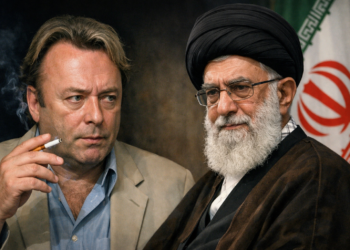


Christopher Hitchens, an intellectual force of nature, strode onto the public stage not merely as an essayist or a speaker, but as a combatant. His arena was the debate hall, the television studio, the lecture circuit – any forum where ideas could be put to the ultimate test. He was not just a participant; he was a gladiator of the mind, wielding logic, erudition, and an unparalleled rhetorical flair. This outline delves into the phenomenon that was Hitchens the debater, a man who saw intellectual discourse not as a polite exchange, but as a profound moral obligation to challenge, provoke, and illuminate. His life was, in many ways, a perpetual argument, a relentless pursuit of truth through the crucible of contention. From his earliest days as a firebrand leftist to his later incarnation as a staunch defender of secularism and a controversial critic of totalitarianism in all its guises, Hitchens consistently sought the most formidable adversaries and the most contentious topics. His reputation preceded him: a fearless, formidable orator whose intellect was as sharp as his wit, and whose presence guaranteed a fascinating, often fiery, intellectual spectacle.

The Hitchensian Style: Wit, Wrath, and Rigor
Rhetorical Arsenal: Mastery of language, classical allusions, and devastating wit
Hitchens possessed a command of the English language that was nothing short of prodigious. His sentences often unfolded with a literary elegance, weaving together complex clauses and obscure vocabulary with an effortless grace. He delighted in classical allusions, drawing parallels between contemporary issues and the wisdom (or folly) of antiquity, often to devastating effect. His wit was legendary – sharp, biting, and often delivered with a mischievous twinkle in his eye, even as it eviscerated an opponent’s argument. He could articulate complex philosophical concepts with crystalline clarity, then pivot to a rapier-like quip that would leave an audience simultaneously gasping and chuckling. This combination of intellectual gravitas and verbal dexterity made him a formidable opponent, capable of both elevating the discourse and delivering a knockout blow.
Logical Precision vs. Passionate Polemic: The balance between academic argument and emotional conviction
While often accused of being overly polemical, Hitchens was a master of logical argumentation. He would dissect an opponent’s premises, expose their fallacies, and systematically dismantle their conclusions with surgical precision. Yet, his debates were rarely bloodless academic exercises. He infused his arguments with a profound moral conviction, a passionate indignation against injustice, superstition, and irrationality. This blend of cool, rational analysis and white-hot emotional intensity was one of his defining characteristics. He believed that some truths were worth fighting for, and that intellectual cowardice was a greater sin than occasional over-exuberance in their defense. His passion was not a substitute for logic, but rather a fuel that propelled his rigorous analytical engine.
The Art of Provocation: How he used sarcasm, irony, and direct confrontation
Hitchens was a connoisseur of provocation. He understood that sometimes, to challenge deeply held beliefs or comfortable prejudices, one must be prepared to be uncomfortable, and to make others so. Sarcasm and irony were key tools in his rhetorical toolkit, often employed to expose hypocrisy or absurdity. He never shied away from direct confrontation, meeting arguments head-on, often with a theatrical flourish that kept audiences captivated. He was not afraid to call out intellectual dishonesty or moral relativism, often in the bluntest terms. This willingness to directly challenge, rather than politely skirt, contentious issues was a hallmark of his debating style, ensuring that no stone was left unturned, no sacred cow unchallenged.
Preparation and Erudition: The depth of his research and historical knowledge
Beneath the dazzling rhetoric lay an immense intellectual foundation. Hitchens was famously erudite, possessing a vast and detailed knowledge of history, philosophy, literature, and politics. He would often cite obscure historical facts, literary passages, or philosophical tenets from memory, seamlessly integrating them into his arguments. His preparation for debates was meticulous; he would read his opponents’ works, anticipating their arguments and arming himself with counter-evidence and devastating rebuttals. This deep well of knowledge meant he could rarely be caught off guard, and often used his opponents’ own words or preferred texts against them. His erudition was not merely for show; it was the bedrock upon which his most compelling arguments were built.
The Battlegrounds: Core Debates and Enduring Themes
The God Debate: His relentless critique of organized religion, particularly monotheism
Perhaps no other topic defined Hitchens more in his later years than his unwavering, often ferocious, critique of organized religion. He saw faith not as a private comfort, but as a dangerous delusion, a source of violence, irrationality, and oppression throughout history. His arguments were multifaceted: historical (the Crusades, the Inquisition), philosophical (the problem of evil, the lack of evidence), and ethical (religion’s role in suppressing reason and human rights). He debated countless religious apologists, from leading theologians to popular evangelists, always maintaining that belief in the supernatural was not merely incorrect, but actively harmful. His books, most notably “God Is Not Great,” became foundational texts for the New Atheism movement, solidifying his position as one of its most articulate and uncompromising voices.
Political Ideologies: Debates on socialism, capitalism, totalitarianism, and interventionism
Hitchens’ political evolution was complex, moving from Trotskyism to a more nuanced, yet still fiercely independent, left-leaning skepticism. He debated the merits and demerits of various political systems, always with an eye towards human liberty and dignity. He was a trenchant critic of totalitarianism, whether communist or fascist, seeing both as affronts to human reason and autonomy. His later support for the Iraq War, born from a conviction that intervention was necessary to combat totalitarian Islamist regimes, caused deep divisions among his former allies, but he defended his stance with characteristic vigor, arguing that principles sometimes demanded difficult choices that transcended traditional political alignments. His debates on these topics were never simplistic, always delving into the historical context and potential consequences of each ideology.
Moral and Ethical Dilemmas: Discussions on free speech, war, torture, and human rights
Many of Hitchens’ most compelling debates centered on fundamental moral and ethical questions. He was an uncompromising defender of free speech, famously stating that “the right to offend is an absolute right,” even when confronting views he found repellent. He engaged in heated discussions about the ethics of war, particularly in the context of humanitarian intervention. While condemning torture, he would often challenge simplistic narratives, forcing interlocutors to confront the complexities of real-world moral dilemmas. His humanism was always at the forefront, guiding his arguments on issues like capital punishment, abortion, and the rights of the individual against the state. He pushed audiences and opponents alike to think beyond slogans and confront the difficult nuances of ethical decision-making.

Historical Revisionism: Challenging established narratives and figures
Hitchens had a deep fascination with history, and an even deeper distrust of uncritical acceptance of historical narratives. He relished challenging established hagiographies, particularly those surrounding figures like Mother Teresa or Bill Clinton, whom he saw as having been unfairly elevated or protected from scrutiny. He would delve into historical records, memoirs, and obscure documents to uncover what he perceived as inconvenient truths, often sparking outrage from those who preferred their heroes unblemished. His historical revisionism was not an act of iconoclasm for its own sake, but an earnest attempt to apply rigorous skeptical inquiry to figures and events that had, in his view, escaped sufficient critical examination. He believed that history, like all other subjects, should be subjected to the harshest intellectual interrogation.
Clash of Titans: Memorable Opponents and Exchanges
The Religious Apologists: Debates with figures like Dinesh D’Souza, William Lane Craig, and Rabbi Shmuley Boteach
Hitchens’ most iconic debates often pitted him against prominent religious apologists. His encounters with Dinesh D’Souza were numerous and always fiery, with Hitchens systematically dismantling D’Souza’s arguments for Christian exceptionalism and the moral superiority of religion. His intellectual sparring with philosopher William Lane Craig, particularly on the existence of God, showcased his ability to engage with sophisticated theological arguments. The often personal and emotionally charged debates with Rabbi Shmuley Boteach highlighted his steadfast refusal to grant religion any special immunity from criticism, even when discussing the Holocaust or Middle Eastern conflicts. These debates were not just intellectual contests but cultural touchstones, watched by millions, and widely disseminated, becoming foundational texts for the skeptical movement.
Embedded Article: The Divine Delusion and the Demolition Man
Christopher Hitchens, in his relentless assault on the divine, was less a debater and more an intellectual demolition expert. He approached religion not as a sacred mystery to be revered, but as a meticulously constructed edifice of human delusion, ripe for deconstruction. His characteristic sarcasm wasn’t just a stylistic flourish; it was a surgical instrument designed to expose the inherent absurdity, the moral hypocrisy, and the intellectual cowardice he perceived at the heart of faith. When a religious apologist would invoke “God’s mysterious ways,” Hitchens would arch an eyebrow, a flicker of contempt in his gaze, and retort, often to thunderous applause, that “mystery” was merely a euphemism for “unprovable nonsense” or “moral evasion.” He delighted in pointing out the barbaric decrees of sacred texts, challenging their proponents to reconcile ancient savagery with modern morality. He once famously quipped that “what can be asserted without evidence can be dismissed without evidence,” a concise encapsulation of his epistemic standard that cut through centuries of theological sophistry. He had a particular disdain for those who claimed religion was the sole fount of morality, swiftly pointing to the countless acts of depravity committed in its name, from the Crusades to contemporary sectarian violence. His arguments were not merely academic; they were impassioned pleas for reason, for secularism, for human autonomy against what he saw as the infantilizing and dangerous dictates of dogma. He reveled in exposing the logical inconsistencies of miracles, the historical inaccuracies of biblical narratives, and the sheer intellectual bankruptcy of supernatural claims. To Hitchens, belief in God was not a benign eccentricity but a formidable obstacle to human progress, a shield behind which ignorance and intolerance too often hid. His brilliance lay in making the demolition of these sacred cows feel not just necessary, but utterly exhilarating, inviting every listener to join him in the grand, liberating project of skepticism.
Political Adversaries: Confrontations with figures across the political spectrum
His political debates were equally diverse and compelling. He engaged with figures from the far left, challenging their romanticized views of socialist regimes, and with conservatives, questioning their adherence to traditional values or interventionist foreign policies. His post-9/11 stance led to confrontations with figures like George Galloway, where he passionately defended the necessity of confronting radical Islam, often drawing upon his historical knowledge of totalitarian movements. These debates revealed a man willing to sacrifice comfort and popularity for the sake of what he believed to be a principled stand, regardless of where it placed him on the conventional political spectrum. He was an equal-opportunity critic, and no ideology was safe from his piercing examination.
Embedded Article: The Shifting Sands of Principle: A Political Dissection
Christopher Hitchens, navigating the treacherous waters of political ideology, was a cartographer of principle, charting a course often baffling to those tethered to conventional labels. He was a self-proclaimed radical, yet one who could be found defending positions that would make many a progressive blanch. His political analysis was less about allegiance and more about a merciless scrutiny of power and cant. He reserved a special venom for the totalitarian impulse, regardless of its ideological packaging. Communism, in his view, was not merely a failed economic experiment but a grotesque assault on human dignity and intellectual freedom, a point he would hammer home with historical anecdotes of gulags and purges. He was equally unsparing of theocratic ambitions, seeing religious rule as merely another variant of authoritarianism, perhaps even more insidious for its claim of divine sanction. His support for the Iraq War, a decision that alienated many, was predicated not on American exceptionalism, but on a visceral hatred for Saddam Hussein’s regime, which he depicted as a secular totalitarian monstrosity. He scoffed at the “anti-war” movement’s supposed moral high ground, often pointing out their selective indignation or their romanticization of despots. “The Left,” he once dryly observed, “now embraces what it once abhorred: theocracy and medievalism, provided it is anti-American.” This wasn’t merely contrarianism; it was a deeply held conviction that moral consistency, even when painful, trumped tribal loyalty. He believed in the universal application of human rights and the imperative to confront tyranny, even if it meant aligning with unlikely partners. His political debates were always a masterclass in dissecting the rhetorical gymnastics of both left and right, stripping away layers of received wisdom to expose the raw, often uncomfortable, truth of power and its abuses. He forced everyone to re-evaluate their positions, often leaving them either enlightened or thoroughly infuriated, which, for Hitchens, was often the same thing.
The Public Intellectuals: Engagements with other prominent thinkers and writers
Beyond the specific themes, Hitchens also engaged in robust intellectual sparring with a host of other public intellectuals, writers, and journalists. These often took the form of panel discussions, literary festivals, or intellectual salons, where he would trade barbs and insights with peers. His debates with figures like Stephen Fry, Tariq Ali, or even his own brother, Peter Hitchens, were remarkable for their intellectual depth, their personal insights, and the often electric atmosphere they created. These engagements showcased his versatility, his ability to pivot between serious philosophical discourse and lighthearted, yet still incisive, banter.
Iconic Moments: Recalling specific, impactful excerpts or arguments
Hitchens’ debates are replete with iconic moments. The “problem of evil” argument against Christian apologists, where he would demand how an omnipotent, omnibenevolent God could allow such suffering, was a frequent highlight. His devastating critiques of the notion of “intelligent design” as mere creationism in disguise, delivered with a smirk and a torrent of scientific facts, were particularly memorable. Moments where he would quote from sacred texts to expose their internal contradictions, or recount historical atrocities committed in the name of faith, left lasting impressions. Perhaps his most iconic trait was his ability to deliver a complex, multi-clause argument, punctuated by a single, perfectly timed, cutting phrase that encapsulated his entire point and left his opponent reeling.
Legacy and Lasting Impact: The Echo of the Arguments
Shaping Public Discourse: How his debates influenced popular understanding of complex issues
Hitchens played a pivotal role in shaping public discourse, particularly on religion and secularism. His debates were often widely circulated, especially in the early days of YouTube, bringing complex philosophical and theological arguments to a mass audience previously unexposed to such rigorous intellectual combat. He demystified academic concepts and made the case for critical thinking accessible, often through the sheer force of his personality and persuasive power. He helped normalize skepticism and made it intellectually fashionable to openly challenge religious belief, contributing significantly to the rise of the “New Atheism” and a broader secular consciousness.
Inspiration for Skepticism: His role in fostering critical thinking and secular humanism
For countless individuals, Hitchens was an entry point into skepticism, secular humanism, and critical thinking. His fearless questioning of authority, tradition, and dogma inspired a generation to look beyond inherited beliefs and to demand evidence and reason. He taught that intellectual courage was not merely admirable but essential, and that the unexamined life, or the unexamined belief, was not worth holding. His influence can be seen in the burgeoning number of skeptical organizations, the increasing willingness to discuss secular values openly, and the continued robust debate on the role of religion in public life.
Critiques and Controversies: The criticisms leveled against his style and arguments
Despite his admirers, Hitchens was not without his critics. Some found his style overly aggressive, his wit sometimes bordering on cruelty, and his arguments occasionally lacking in nuance or compassion. His unwavering support for the Iraq War, in particular, drew widespread condemnation and led to accusations of intellectual inconsistency or moral compromise. Others argued that his polemical approach, while entertaining, sometimes overshadowed the substance of his arguments, or alienated potential allies. These critiques, while valid in their own right, rarely diminished his impact or his enduring appeal to those who valued intellectual rigor and uncompromising honesty above all else.
Enduring Relevance: Why his debate performances continue to resonate today
Even years after his death, Hitchens’ debate performances continue to resonate. The issues he grappled with – the nature of faith, the dangers of totalitarianism, the importance of free speech, the ethics of war – remain intensely relevant. His arguments, carefully constructed and eloquently articulated, stand the test of time, often feeling as fresh and pertinent today as they did when first delivered. His unique blend of intellectual firepower, rhetorical flair, and moral conviction ensures that he remains a touchstone for anyone interested in the art of debate, the pursuit of truth, and the enduring power of ideas.
Conclusion: The Debater’s Afterglow
Christopher Hitchens was more than just a public intellectual; he was a grand inquisitor, not in the sense of enforcing dogma, but of relentlessly interrogating it. He perfected the art of debate, elevating it beyond mere contention into a profound intellectual and moral enterprise. His unique contribution lay in his unparalleled ability to combine vast erudition with devastating wit, logical precision with passionate conviction, and fearless provocation with a deep commitment to truth. His debates were not just battles of words; they were intellectual spectacles that challenged audiences, exposed hypocrisies, and illuminated complex issues with breathtaking clarity. His enduring presence in the intellectual landscape is a testament to the power of a mind unafraid to challenge conventional wisdom, to dissect sacred cows, and to always, always argue the point. The echo of his arguments continues to reverberate, a lasting challenge to unreason and a perpetual inspiration for those who believe that ideas, when rigorously debated, can indeed change the world.