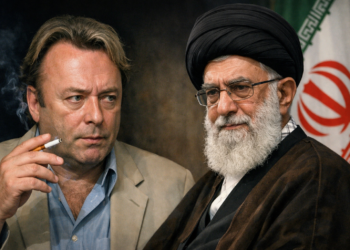


Christopher Hitchens, an intellectual force of nature, carved an indelible niche in the landscape of public discourse through his incisive debates and unyielding commitment to reason. This outline delves into the multifaceted aspects of Hitchens’ debating prowess, exploring his signature style, the recurrent themes that animated his arguments, and the lasting impact he left on intellectual and political conversations. From his relentless critique of religion to his passionate defense of free speech, Hitchens approached every topic with a unique blend of scholarly rigor, rhetorical brilliance, and a famously mordant wit. His capacity to articulate complex ideas with precision and persuasive power transformed countless forums into arenas of vibrant intellectual combat, solidifying his legacy as one of the most compelling and controversial public figures of his era. Understanding Hitchens as a debater means appreciating his profound influence on how we engage with fundamental questions concerning faith, politics, history, and the very nature of human liberty.

I. Introduction to Hitchens as a Debater
A. The Quintessential Public Intellectual and Orator
Christopher Hitchens stood as a titan in the realm of public intellectual discourse, embodying the very essence of a thinker deeply engaged with the pressing issues of his time. He was not merely an academic confined to the ivory tower but a formidable presence on any stage, capable of captivating audiences with his profound erudition, razor-sharp intellect, and an almost poetic command of the English language. His status as a “public intellectual” was cemented by his relentless pursuit of truth, often through confrontational yet ultimately enlightening debate, ensuring that complex ideas were accessible and vigorously contested in the public square. He represented an increasingly rare breed: someone who prioritized the robust exchange of ideas over ideological comfort, making him a central figure in intellectual conversations across the globe. His ability to synthesize vast amounts of information from history, philosophy, and literature into coherent, compelling arguments was unparalleled, setting a benchmark for intellectual engagement.
As an orator, Hitchens possessed a unique blend of theatricality and substance. His voice, a distinctive baritone, could shift from a conspiratorial whisper to a thunderous pronouncement, always precisely tuned to the nuance of his argument. Every pause, every inflection, served a purpose, drawing listeners into his meticulously constructed logical framework. He understood the rhythm of rhetoric, the power of a well-placed rhetorical question, and the persuasive force of a vivid metaphor. This mastery of oratorical skills, combined with his deep knowledge base, transformed his debates from mere discussions into intellectual spectacles, where ideas were tested under immense pressure, and audiences were left invigorated, regardless of whether they agreed with his conclusions. His performances were never just about winning; they were about illuminating, challenging, and provoking thought, solidifying his reputation as one of the most compelling speakers of his generation.
B. Signature Style: Incisive Wit, Intellectual Rigor, and Uncompromising Eloquence
Christopher Hitchens’ debating style was a finely honed instrument, characterized by a trinity of incisive wit, unwavering intellectual rigor, and an uncompromising eloquence. His wit was not merely for comedic effect; it was a devastating weapon, often employed to expose the absurdities or hypocrisies in an opponent’s argument with surgical precision. Through clever turns of phrase and biting sarcasm, he could dismantle a position in a way that was both memorable and devastatingly effective, leaving audiences chuckling even as they grasped the profound intellectual point being made. This comedic edge, far from trivializing his arguments, often served to highlight their seriousness by stripping away pretension and cant.
Beneath the captivating surface of his wit lay a bedrock of intellectual rigor. Hitchens was famously well-read, drawing upon a vast personal library and an encyclopedic knowledge of history, philosophy, literature, and current events. He would meticulously research his subjects, armed with facts, dates, and quotations that few of his opponents could match. This deep intellectual preparation meant his arguments were not based on flimsy assertions or emotional appeals, but on a robust foundation of evidence and logical reasoning. He challenged opponents not just on their conclusions, but on their premises, their methods, and their understanding of the very concepts they employed. This commitment to intellectual thoroughness elevated his debates far beyond superficial skirmishes, turning them into genuinely educational experiences.
Finally, his uncompromising eloquence was the vessel through which this wit and rigor were delivered. Hitchens spoke and wrote with a clarity and elegance that harkened back to classical rhetoric. He eschewed jargon, favoring precise, evocative language that conveyed complex ideas with striking lucidity. His sentences were often intricately constructed, yet flowed effortlessly, building towards powerful conclusions. This eloquence allowed him to articulate profound criticisms and radical ideas without resorting to demagoguery, always trusting in the power of well-reasoned argument to persuade. He believed deeply in the capacity of language to shape thought, and he wielded it with the precision of a craftsman, making every word count in his relentless pursuit of truth and intellectual integrity.

C. Reputation: The ‘Contrarian’ and ‘Troublemaker’ Who Cherished Open Discourse
Christopher Hitchens earned a reputation as the quintessential ‘contrarian’ and ‘troublemaker,’ titles he often embraced with a mischievous gleam in his eye. This perception stemmed from his consistent willingness to challenge prevailing orthodoxies, whether they originated from the left or the right, from religious institutions or secular dogma. He seemed to delight in overturning received wisdom, scrutinizing popular figures, and questioning assumptions that others took for granted. This wasn’t contrarianism for its own sake, but rather an expression of his deep-seated skepticism and an unwavering commitment to intellectual honesty, even when it led him down unpopular paths. He relished being the gadfly, provoking discomfort in the service of deeper understanding.
Yet, underlying this ‘troublemaker’ persona was a profound reverence for open discourse. Hitchens didn’t seek to shut down debate; he sought to ignite it. He believed that only through the rigorous, uninhibited exchange of ideas, where every premise could be questioned and every conclusion tested, could societies progress and individuals truly flourish. He saw debate not as a battle to be won at all costs, but as a collaborative search for truth, even if that search often involved fierce disagreement. For him, the marketplace of ideas was sacred, and any attempt to stifle free expression or impose intellectual conformity was an anathema. This commitment meant he often engaged with opponents he profoundly disagreed with, confident that the strength of his arguments, or the weakness of theirs, would eventually prevail in the open forum. His willingness to speak truth to power, often at great personal cost, endeared him to many who admired his courage and intellectual independence, cementing his image as a vital, if often uncomfortable, voice in public life.
D. Commitment to Reason and Skepticism
At the core of Christopher Hitchens’ intellectual philosophy lay an unwavering commitment to reason and skepticism. He saw rational inquiry as the ultimate tool for understanding the world and skepticism as the necessary safeguard against dogma, superstition, and wishful thinking. For Hitchens, every proposition, no matter how cherished or widely accepted, had to withstand the scrutiny of logical analysis and empirical evidence. He applied this principle universally, from the grand narratives of religion to the intricacies of political policy, insisting on clarity of thought and the rigorous examination of claims.
His skepticism was not cynical nihilism but a constructive force, driven by a desire to arrive at more accurate and truthful understandings. He challenged assertions by demanding evidence, questioning authority, and exposing logical fallacies wherever they appeared. This often made him an uncomfortable figure for those who preferred the comforting certainties of faith or ideology. Hitchens believed that the human capacity for reason was our greatest asset, and that to surrender it to unexamined belief or emotional appeals was a profound betrayal of our intellectual potential. He frequently argued that the scientific method, with its emphasis on testability, falsifiability, and peer review, offered the most reliable path to knowledge, contrasting it sharply with the dogmatic assertions of faith. This commitment to Enlightenment ideals made him a tireless advocate for secularism, critical thinking, and intellectual freedom, believing that the advancement of humanity depended on our collective willingness to challenge, question, and apply reason to every facet of existence. He tirelessly championed the principle that what can be asserted without evidence can also be dismissed without evidence, a mantra that encapsulated his approach to many of his most famous debates.

II. Dominant Themes and Topics
A. Religion and Atheism: The Cornerstone of Many Debates
For Christopher Hitchens, religion and atheism were not merely topics of interest but fundamental battlegrounds for the human mind. His debates on this subject were numerous and legendary, forming the cornerstone of his public intellectual persona. He was a leading voice in the ‘New Atheism’ movement, tirelessly advocating for a purely secular worldview and a radical critique of religious belief. His seminal work, “God Is Not Great: How Religion Poisons Everything,” encapsulated his thesis: that religion is not just false, but actively harmful, fostering ignorance, promoting violence, and impeding human progress. He argued against the moral authority of faith, pointing to its historical record of conflict, oppression, and the suppression of scientific inquiry.
Hitchens’ arguments against religion were multifaceted, spanning historical, philosophical, and moral dimensions. He meticulously deconstructed biblical narratives, highlighting their contradictions, anachronisms, and ethical failings. He challenged the very concept of divine revelation, emphasizing the absence of empirical evidence for any supernatural claims. Morally, he contended that religiously derived ethics were often arbitrary, cruel, and inferior to a humanistic morality based on reason, empathy, and the pursuit of justice. He famously argued that humanity’s capacity for good exists independently of divine command, and indeed, is often undermined by it. His debates with prominent religious apologists were often electrifying, marked by his unparalleled ability to cite scripture, history, and philosophy to dismantle arguments for God’s existence or benevolence. He viewed the struggle against religious influence as a critical component of the broader struggle for human liberation and intellectual freedom, seeing religion as a primary obstacle to rational thought and societal advancement. For Hitchens, religion was not a benign eccentricity but a dangerous delusion that deserved relentless intellectual scrutiny and unsparing criticism.
B. Politics and Ideology: From Socialism to Interventionism
Christopher Hitchens’ engagement with politics and ideology was a complex and evolving journey, marked by both unwavering principles and controversial shifts. His intellectual roots were firmly planted in the democratic socialist tradition, particularly evident in his early writings for publications like The Nation and New Left Review. During this period, he was a vocal critic of American foreign policy, consumerism, and the excesses of capitalism, articulating a vision of social justice and international solidarity. He passionately advocated for the poor and marginalized, and his critiques of figures like Henry Kissinger were legendary for their moral indignation and historical depth. He saw the world through a lens of anti-imperialism and a commitment to radical truth-telling, aligning himself with socialist movements globally.
However, the events of 9/11 marked a significant ideological pivot for Hitchens, propelling him towards a stance of muscular interventionism and a vocal alignment with the “War on Terror.” He became a staunch advocate for the invasion of Iraq, believing it a necessary step to depose a tyrannical regime and confront the forces of Islamist extremism, which he viewed as a profoundly anti-humanist ideology. This shift alienated many of his former allies on the left, who accused him of abandoning his principles. Hitchens, however, maintained that his core values of secularism, anti-totalitarianism, and human rights remained consistent, arguing that these principles now demanded a confrontation with new forms of tyranny, even if it meant siding with former adversaries. His debates on politics became highly charged, as he fiercely defended his post-9/11 positions, often clashing with figures from both the anti-war left and the isolationist right. He continued to advocate for free speech, secular governance, and a vigilant defense against all forms of totalitarianism, whether religious or political, even as his methods and alliances evolved. His political commentary remained deeply informed by historical precedent and a keen analytical mind, always delivered with his characteristic intellectual ferocity.
C. War and Foreign Policy: The Iraq War, Bosnia, and the ‘War on Terror’
Christopher Hitchens’ views on war and foreign policy were among the most defining and often contentious aspects of his public life. His positions were complex, eschewing simple categorization and demonstrating his willingness to follow arguments to their logical conclusions, even if unpopular. Prior to 9/11, Hitchens was a vocal critic of American interventionism, frequently condemning U.S. foreign policy actions, particularly in Latin America and the Middle East, as imperialistic and destabilizing. His early work on figures like Henry Kissinger exposed the moral compromises and human costs of realpolitik. He was a passionate advocate for the victims of state terror and championed humanitarian interventions when he believed the cause was just and the necessity dire.
His advocacy for intervention in Bosnia in the 1990s, where he argued for military action against Serbian aggression to prevent genocide, foreshadowed his later, more controversial stance. He saw the failure to act in Bosnia as a moral stain, a repetition of past appeasement. The events of September 11, 2001, irrevocably altered his perspective on international conflict. Hitchens became one of the most prominent liberal voices in favor of the Iraq War, arguing that Saddam Hussein’s regime was a totalitarian monstrosity that posed a clear and present danger, and that its removal was a moral imperative. He believed that the secular, modernizing forces within Iraq, however embryonic, deserved support against both Saddam’s Ba’athist tyranny and the rising tide of Islamist extremism. He saw the “War on Terror” not just as a defensive measure, but as a necessary ideological struggle against a fanatical, anti-Western, and anti-Enlightenment ideology. His debates on this topic were often his most intense, pitting him against former allies and drawing both fervent support and vehement condemnation. He meticulously articulated his rationale, emphasizing the unique dangers of Islamist totalitarianism and the moral obligation to confront it, even through military means, aligning his principles of secularism and anti-totalitarianism with a more assertive foreign policy. His passionate and often polemical defense of the war reflected his deep conviction that certain evils demand a forceful response, and that inaction can be a moral failing of the highest order.

D. Historical Figures and Narratives: Deconstructing Icons (e.g., Mother Teresa, Henry Kissinger)
Christopher Hitchens possessed a unique talent for deconstructing historical figures and narratives, often challenging hagiographic portrayals and revealing the less palatable truths beneath the surface of public perception. He was an iconoclast in the truest sense, unafraid to tackle sacred cows and dismantle myths that had long gone unchallenged. His approach was not gratuitous muckraking, but a rigorous, evidence-based critique aimed at revealing historical accuracy and moral accountability.
One of his most famous deconstructions was that of Mother Teresa, whom he famously dubbed “Hell’s Angel” in his book “The Missionary Position: Mother Teresa in Theory and Practice.” Hitchens meticulously documented her questionable financial dealings, her embrace of dictators, her opposition to contraception and abortion in the face of immense suffering, and the often squalid conditions of her hospices, which he argued prioritized suffering as a path to piety rather than its alleviation. He challenged the widely accepted narrative of her selfless saintliness, replacing it with a portrait of a dogmatic ideologue more concerned with religious conversion than with genuine humanitarian aid. This critique sparked immense controversy but forced many to re-evaluate a figure previously beyond reproach.
Similarly, his relentless pursuit of Henry Kissinger, culminating in “The Trial of Henry Kissinger,” showcased his commitment to holding powerful figures accountable for their actions. Hitchens meticulously detailed Kissinger’s alleged involvement in war crimes, massacres, and the overthrow of democratic governments in places like Chile, Cambodia, and East Timor. He argued that Kissinger, far from being a diplomatic genius, was a cynical operative whose policies led to immense human suffering and moral degradation. These weren’t mere opinion pieces; they were prosecutorial briefs, demanding that history confront the darker chapters in the careers of figures often celebrated by the mainstream. Hitchens believed that uncritical admiration of historical figures was intellectually lazy and morally dangerous, and that a truly honest understanding of the past required stripping away sentimentality and confronting uncomfortable truths. His ability to marshal extensive historical evidence and present it with such polemical force made these deconstructions some of his most impactful and memorable contributions to public discourse.
E. Free Speech, Secularism, and Civil Liberties
Christopher Hitchens was a fierce and unwavering champion of free speech, secularism, and civil liberties, viewing these principles as the indispensable pillars of a just and enlightened society. For him, free speech was not just a right, but a fundamental human necessity, the engine of intellectual progress and the ultimate safeguard against tyranny. He famously declared that “the only reason to have free speech is to protect speech that you don’t like,” underscoring his belief that even offensive or unpopular ideas must be allowed to be aired and debated, not suppressed. He rigorously opposed censorship in all its forms, whether from religious fundamentalists, political authoritarians, or well-meaning but misguided liberal censors. He argued that the proper response to bad ideas was more speech, more robust debate, and more critical thinking, not silence or suppression. This commitment led him to defend controversial figures and publications, even when he profoundly disagreed with their content, because the principle of free expression was paramount.
His advocacy for secularism was equally passionate. Hitchens believed that the separation of church and state was crucial for protecting individual liberty and preventing the imposition of religious dogma on a diverse populace. He saw the encroachment of religious belief into public policy, education, and law as a grave threat to rational governance and civil rights. He argued that secularism was not anti-religious, but rather a guarantor of religious freedom for all, ensuring that no single faith could dominate or oppress others, and that those with no faith were equally protected. He campaigned tirelessly against faith-based initiatives, religious instruction in schools, and any attempt to grant religious institutions undue influence in the political sphere, seeing these as dangerous erosions of the secular compact. Finally, his defense of civil liberties was a consistent thread throughout his career, linking his early socialist critiques of state power with his later concerns about authoritarianism. He argued against torture, unwarranted surveillance, and any expansion of state power that threatened individual freedoms. Hitchens understood that without the robust protection of civil liberties, the ideals of free speech and secularism would be hollow. He viewed these three principles as interconnected and mutually reinforcing, essential for fostering an open, tolerant, and intellectually vibrant society capable of self-correction and progress. His arguments on these topics were always lucid, historically informed, and imbued with a deep sense of urgency, reflecting his conviction that they represented the frontline in the ongoing battle for human dignity and intellectual emancipation.
III. Signature Debating Techniques and Rhetorical Devices
A. Masterful Command of Language: Eloquence, Vocabulary, and Syntax
Christopher Hitchens’ debates were always showcases of a truly masterful command of the English language. His eloquence was not merely a stylistic flourish but an integral part of his persuasive power. He constructed arguments with a precision that was both intimidating and intellectually exhilarating, using vocabulary that was rich and varied without ever being ostentatious. He had an innate ability to select precisely the right word or phrase to convey a complex idea or deliver a crushing critique. His sentences, often long and grammatically intricate, were nevertheless models of clarity and flow, building momentum towards devastating conclusions. He understood the musicality of language, its rhythms and cadences, and employed them to maximum effect, making his spoken arguments as compelling as his written prose.
His debates were peppered with forgotten words and classical constructions, yet he never sounded archaic; instead, he sounded timeless, reminding audiences of the enduring power of well-formed arguments. This precise syntax and broad vocabulary allowed him to express nuanced distinctions, draw subtle parallels, and articulate profound philosophical points with breathtaking clarity. He treated language as a sacred trust, a tool for uncovering truth and exposing falsehood, and he wielded it with a craftsman’s skill and a scholar’s reverence. For Hitchens, sloppy language often betrayed sloppy thinking, and thus, his meticulous attention to linguistic detail was a reflection of his uncompromising intellectual rigor. His debates were not just about the content of the argument, but also about the beauty and power of the language used to construct it, making them a feast for both the mind and the ear.
B. Devastating Sarcasm, Irony, and Wry Humor
One of the most distinctive and memorable aspects of Christopher Hitchens’ debating style was his masterful deployment of devastating sarcasm, sharp irony, and a uniquely wry humor. These were not mere rhetorical flourishes but integral components of his argumentative strategy, often serving to expose the absurdities, hypocrisies, or logical inconsistencies in an opponent’s position. His sarcasm could be withering, delivered with a detached amusement that made the target of his scorn appear utterly ridiculous. He often used it to highlight the preposterousness of certain religious claims or political platitudes, cutting through sentimentality and unexamined pieties with a surgeon’s precision. For example, when discussing the concept of divine revelation, he might deliver a sarcastic remark about the convenience of God speaking exclusively to uneducated desert tribes, making the point without explicit condemnation.
His irony was equally potent, often employed to underscore the unintended consequences or self-defeating nature of an opponent’s argument. He could articulate a point in such a way that its apparent meaning was subtly contradicted by its underlying truth, leaving listeners with a deeper, often uncomfortable, insight. This intellectual playfulness allowed him to engage with serious topics without ever becoming ponderous, inviting audiences to join him in a shared moment of intellectual discovery, even if it involved a dose of uncomfortable truth. The wry humor that permeated his debates was never gratuitous; it served as an intellectual leavening agent, making complex or somber topics more engaging and memorable. It often came in the form of a perfectly timed one-liner or a droll observation that could deflate an opponent’s pomposity or highlight a subtle flaw in their reasoning. Hitchens understood that humor, when wielded intelligently, could be a powerful tool for persuasion, disarming opponents and winning over audiences, not through cheap laughs, but through genuine intellectual amusement. These rhetorical devices were not just tools for entertainment; they were instruments of intellectual demolition, allowing him to dismantle arguments with wit and style, leaving an indelible impression on anyone who witnessed his performances.
C. Extensive Historical, Literary, and Philosophical Allusions
Christopher Hitchens’ arguments were always richly embroidered with an astonishing array of historical, literary, and philosophical allusions. This extensive erudition was not merely for show; it was a fundamental aspect of his intellectual approach, allowing him to ground his contemporary critiques in a deep understanding of human thought and experience across millennia. When discussing modern political events, he might effortlessly draw parallels to the Peloponnesian War or the French Revolution, providing a broader context and demonstrating the enduring patterns of human behavior. His command of history allowed him to illuminate current events with lessons from the past, exposing recurrent fallacies or celebrating timeless virtues.
Literary allusions were equally abundant in his debates. He would quote from canonical poets, novelists, and playwrights – from Orwell and Nabokov to Shakespeare and Swift – not just to embellish his speech, but to evoke specific moral, psychological, or political insights that resonated with his immediate point. These literary references served to deepen the emotional and intellectual impact of his arguments, adding layers of meaning and connecting his discourse to the broader humanistic tradition. A well-placed line of poetry could encapsulate a complex idea or deliver a poignant critique in a way that dry prose could not. Furthermore, Hitchens’ arguments were deeply informed by philosophical thought. He frequently invoked thinkers from Plato and Spinoza to Hume and Bertrand Russell, using their frameworks to analyze contemporary issues or challenge prevailing dogmas. His debates on religion, for instance, were often steeped in the history of skeptical philosophy, drawing on centuries of anti-clerical thought to bolster his arguments. This intricate web of allusions demonstrated the breadth of his reading and the depth of his understanding, inviting his audience to engage with his arguments on multiple intellectual levels. It transformed his debates from mere exchanges of opinion into rich intellectual journeys, educating and challenging listeners by placing contemporary issues within a vast tapestry of human knowledge and critical inquiry.
D. Logical Deconstruction and Exposure of Fallacies
At the heart of Christopher Hitchens’ debating methodology was an unwavering commitment to logical deconstruction and the meticulous exposure of fallacies. He possessed a keen analytical mind that could swiftly dissect an opponent’s argument, identifying its weakest links and structural flaws. He was not content to merely state a differing opinion; he aimed to demonstrate why an opponent’s position was logically unsound, internally contradictory, or based on false premises. Hitchens often employed the Socratic method, though with a polemical edge, probing an opponent’s assertions until their inconsistencies became apparent. He would follow a line of reasoning to its absurd conclusion, revealing its inherent flaws without needing to explicitly state them.
He was particularly adept at recognizing and naming common logical fallacies. Arguments from authority, appeals to emotion, ad hominem attacks, strawman arguments, and non sequiturs were all fair game for Hitchens’ critical gaze. He would calmly, yet devastatingly, point out when an opponent had shifted the goalposts, engaged in special pleading, or relied on tautological reasoning. For instance, in debates on the existence of God, he would systematically dismantle arguments like the “first cause” or “fine-tuning” arguments, exposing their leaps of faith or unproven assumptions. He always insisted on clarity of definition, challenging opponents to define their terms precisely before proceeding, thereby preventing ambiguity from clouding the debate. This rigorous adherence to logical principles made his arguments remarkably robust and difficult to counter, forcing his opponents to engage with substance rather than rhetoric. For Hitchens, reason was the ultimate arbiter, and any argument that failed to stand up to logical scrutiny was, by definition, intellectually deficient. His debates served as masterclasses in critical thinking, demonstrating how to systematically break down complex arguments into their constituent parts and evaluate their validity based on rational principles alone.
E. Impassioned Delivery and Commanding Stage Presence
Christopher Hitchens’ intellectual rigor was invariably amplified by his impassioned delivery and commanding stage presence. He was not a dispassionate academic, but a performer in the best sense of the word, capable of electrifying an audience and holding their attention with magnetic force. His voice, a resonant baritone, could range from a low, conspiratorial murmur to a booming pronouncement, always precisely calibrated to the emotional and intellectual demands of his argument. He possessed a theatrical flair, using gestures, facial expressions, and strategic pauses to enhance the impact of his words. His eyes, often narrowed in intense focus, conveyed both skepticism and a burning conviction, drawing listeners into the drama of his intellectual combat.
When Hitchens spoke, he exuded an undeniable authority, not born of arrogance, but of deep conviction and profound knowledge. He seemed utterly comfortable on stage, whether facing a hostile crowd or a rapt audience, radiating a sense of intellectual fearlessness. This commanding presence allowed him to dominate the rhetorical space, guiding the narrative of the debate and often forcing his opponents to react to his terms. He understood that effective communication requires not just compelling content, but also compelling delivery. His passion was palpable, particularly when discussing topics like injustice, totalitarianism, or the perils of religious dogma. This intensity was infectious, often stirring strong reactions in audiences, whether agreement or fervent disagreement. Far from being a mere talking head, Hitchens was a force of nature in full flow, transforming debates into gripping intellectual spectacles where the power of ideas was made manifest through the sheer force of his personality and his unparalleled gift for public speaking. His performances were always an education in the art of persuasive oratory, demonstrating how profound thought could be delivered with both elegance and visceral impact.
F. The Art of the ‘One-Liner’ and Memorable Retort
A hallmark of Christopher Hitchens’ debating style was his unparalleled mastery of the ‘one-liner’ and the memorable retort. He possessed an uncanny ability to distill complex arguments or devastating critiques into concise, witty, and often brutal phrases that would instantly become iconic. These weren’t mere jokes; they were often perfectly crafted intellectual grenades, designed to explode an opponent’s premise or expose their folly in a single, unforgettable stroke. For example, when confronted with the argument that religion provides meaning, he might retort with something like, “The search for meaning is a human endeavor, not a divine gift.” Or, when challenging the notion of a benevolent God allowing suffering, he might ask, “Does God hate amputees?” These retorts were sharp, precise, and aimed directly at the core of the issue, leaving little room for equivocation.
His one-liners often served multiple purposes: they could inject humor into a tense moment, disarm an opponent, or, most importantly, succinctly encapsulate a profound philosophical point. They demonstrated his quick thinking and his ability to synthesize information under pressure, turning an opponent’s own words or assumptions against them with startling efficiency. A memorable retort could often win over an audience, not just through laughter, but by revealing a fundamental truth with striking clarity and wit. Hitchens understood that a single, perfectly phrased sentence could often do more argumentative work than paragraphs of exposition. These rhetorical gems were carefully honed products of his vast vocabulary, intellectual agility, and a mischievous desire to prick pomposity and challenge received wisdom. His debates were replete with these moments of verbal brilliance, ensuring that even listeners who disagreed with his conclusions would often recall his specific lines long after the debate concluded, cementing his reputation as a master of the spoken word and a formidable opponent in any intellectual skirmish.
IV. Notable Opponents and Memorable Confrontations
A. Religious Apologists: Dinesh D’Souza, William Lane Craig, Al Sharpton, Tony Blair
Christopher Hitchens’ most iconic and frequent confrontations were with religious apologists, figures who sought to defend faith against his relentless secular critique. These debates were often intellectual gladiatorial contests, pitting Hitchens’ empirical rationalism against theological arguments for the existence of God, the morality of scripture, or the necessity of faith. His clashes with figures like Dinesh D’Souza were particularly notable. D’Souza, a conservative commentator and Christian apologist, often attempted to counter Hitchens with philosophical arguments for God’s existence and criticisms of atheism’s perceived moral emptiness. Hitchens, in turn, would meticulously deconstruct D’Souza’s theological premises, citing historical atrocities committed in the name of religion and emphasizing the sufficiency of human reason for moral guidance, often pointing out D’Souza’s own logical inconsistencies with his characteristic sharp wit.
Similarly, his debates with Christian philosopher William Lane Craig were renowned for their intellectual rigor, delving into complex cosmological and ontological arguments for God. Hitchens respected Craig’s intellectual depth but ruthlessly challenged his reliance on philosophical proofs, insisting on empirical evidence and highlighting the problem of evil. His encounter with Al Sharpton, though less philosophical, was significant for its cultural resonance, pitting Hitchens’ secularism against Sharpton’s faith-based activism, often leading to impassioned exchanges on the role of religion in social justice and civil rights movements. Even his debate with former UK Prime Minister Tony Blair, a devout Christian, on the proposition “Is Religion a Force for Good in the World?” at Intelligence Squared, drew immense attention. In these confrontations, Hitchens never shied away from directly challenging the most cherished beliefs of his opponents, always insisting on a commitment to reason and evidence over dogma and tradition. He approached these debates not as personal attacks, but as essential battles in the ongoing intellectual struggle against what he perceived as the corrosive influence of unreason and superstition on human thought and progress.
B. Political Figures and Commentators: George Galloway, David Horowitz, Glenn Greenwald
Christopher Hitchens engaged in numerous high-profile debates with a diverse range of political figures and commentators, often spanning the ideological spectrum. These confrontations highlighted his intellectual versatility and his willingness to challenge both left and right-wing orthodoxies. One of his most famous and acrimonious debates was with British politician George Galloway. Their clashes, particularly regarding the Iraq War and their differing stances on figures like Saddam Hussein, were legendary for their intensity and vitriol. Hitchens accused Galloway of being an apologist for tyranny, while Galloway dismissed Hitchens as a neoconservative sell-out. These debates exemplified Hitchens’ post-9/11 political evolution and his uncompromising stance against what he viewed as anti-American and anti-Western sentiments on parts of the left. The sheer animosity between them often made for compelling, albeit uncomfortable, viewing.
His debates with conservative figures like David Horowitz were also frequent. While they often found common ground in their critique of radical Islam and certain aspects of the left, Hitchens would still challenge Horowitz on issues related to American exceptionalism, the role of religion in politics, or aspects of conservative foreign policy. These debates showed Hitchens’ capacity to find allies on particular issues while maintaining his intellectual independence. Towards the end of his life, he also engaged with younger progressive journalists like Glenn Greenwald, particularly on issues related to the Iraq War, government surveillance, and the definition of civil liberties. These discussions often saw Hitchens defending his more hawkish positions, drawing on his deep historical understanding and his anti-totalitarian principles, while Greenwald represented a more contemporary, skeptical liberal viewpoint. In all these political confrontations, Hitchens demonstrated his unwavering commitment to his principles, whether defending his past socialist critiques or articulating his later interventionist stance. He brought to these debates the same intellectual rigor, historical depth, and rhetorical flair he applied to all subjects, ensuring that political discourse remained robust, challenging, and often fiercely contentious.
C. Academics and Philosophers: Stephen C. Meyer
While often seen clashing with religious leaders or politicians, Christopher Hitchens also engaged with academics and philosophers, demonstrating his intellectual breadth and his willingness to tackle complex theoretical arguments. A notable example was his debate with Stephen C. Meyer, a prominent proponent of Intelligent Design and a senior fellow at the Discovery Institute. These debates delved into the realms of science, philosophy of science, and the origins of life, moving beyond simple theological assertions to more sophisticated arguments for a designer. Hitchens, while not a scientist himself, was exceptionally well-versed in evolutionary biology and the philosophy of science, and he meticulously challenged Meyer’s claims. He would confront Meyer’s arguments about irreducible complexity or specified information, drawing upon the vast scientific consensus on evolution by natural selection and highlighting the logical gaps and pseudo-scientific nature of Intelligent Design. He emphasized that arguments for a designer were ultimately arguments from ignorance, filling gaps in current scientific understanding with a supernatural explanation rather than continuing scientific inquiry.
These confrontations were particularly important as they exposed Hitchens’ ability to engage with and critique scientific and philosophical arguments, not just theological ones. He demonstrated that his commitment to reason extended to the rigorous standards of scientific proof and falsifiability. He argued that Intelligent Design, by invoking supernatural causation, failed the test of scientific methodology and ultimately relied on faith rather than evidence. These debates showcased his intellectual courage in directly challenging academic arguments that he perceived as undermining scientific progress and promoting a disguised form of religious dogma. His capacity to hold his own against scholars specializing in these fields underscored his extraordinary intellectual preparation and his relentless pursuit of truth through rational inquiry, making him a formidable opponent even for those operating within specialized academic disciplines. He believed that the integrity of science and education were paramount, and he would vigorously defend them against what he saw as ideological incursions.
D. Key Debate Forums: Intelligence Squared, University Debates, Television Appearances
Christopher Hitchens was a ubiquitous presence across a variety of key debate forums, each platform amplifying his unique debating style and extending his influence to diverse audiences. Perhaps his most iconic appearances were at Intelligence Squared (IQ2) debates. These forums, known for their high-quality participants, Oxford Union-style format, and sophisticated audiences, provided the perfect stage for Hitchens to showcase his blend of erudition, wit, and rhetorical flair. The formal structure of IQ2, with propositions for and against, allowed him to construct detailed, well-paced arguments and engage in direct, often fiery, rebuttals. His debates there, particularly against Tony Blair on religion, remain benchmarks of modern public discourse and are widely studied for their argumentative power.
University debates were another crucial arena for Hitchens. From the Oxford Union and Cambridge Union to countless campuses across North America, he consistently drew massive crowds of students and faculty. These settings allowed him to directly address younger generations, challenging their assumptions and inspiring critical thought. He relished the opportunity to engage with an audience often eager for intellectual combat, and his performances in university halls were often characterized by his willingness to directly answer audience questions, even when provocative. These debates were instrumental in cementing his legacy among aspiring intellectuals and activists. Beyond these formal settings, Hitchens was a frequent guest on television programs, from news analysis shows to late-night talk shows. While these platforms offered less time for sustained argument, he mastered the art of delivering memorable soundbites, sharp retorts, and concise articulations of his positions, reaching millions who might not attend a formal debate. His media appearances were crucial for translating complex ideas into accessible formats, making him a household name for many. Across all these forums, Hitchens consistently elevated the standard of public debate, turning intellectual argument into compelling entertainment and demonstrating the enduring power of reason and eloquence in the public square.
V. Impact, Legacy, and Criticisms
A. Elevating the Standard of Public Discourse and Argumentation
Christopher Hitchens’ most significant and enduring impact lies in his role in elevating the standard of public discourse and argumentation. In an era often characterized by superficial soundbites and polarized echo chambers, Hitchens stood as a defiant advocate for rigorous, evidence-based debate. He demonstrated that complex ideas could be articulated with clarity and passion, and that disagreement, when conducted with intellectual integrity, could be a profoundly enlightening experience. He eschewed rhetorical shortcuts, insisting on a meticulous approach to facts, historical context, and logical reasoning. By consistently demanding intellectual rigor from himself and his opponents, he set a high bar for public intellectuals and commentators.
His debates were not just about winning; they were about illuminating the complexities of an issue, exposing fallacies, and inviting audiences to think critically. He showed that it was possible to be ferociously polemical without resorting to ad hominem attacks (unless those attacks were meticulously justified). His eloquence, vast knowledge, and sharp wit made intellectual combat compelling and accessible, drawing a wide audience to topics that might otherwise be considered dry or academic. He inspired countless individuals to engage more deeply with political, philosophical, and religious questions, encouraging them to question authority, interrogate assumptions, and construct their own arguments with care. In an increasingly fragmented media landscape, Hitchens reminded us of the vital importance of the shared public square, where ideas are tested, challenged, and refined through open and robust debate. His legacy is a testament to the power of a single, brilliant mind to elevate the collective intellectual conversation and demonstrate the profound value of uncompromising intellectual honesty.
B. Inspiring the ‘New Atheism’ Movement and Critical Thought
Christopher Hitchens played a pivotal and undeniable role in inspiring and shaping the ‘New Atheism’ movement, a wave of thought that brought secularism and a forceful critique of religion back into mainstream public discourse. His book, “God Is Not Great,” along with works by Richard Dawkins, Sam Harris, and Daniel Dennett, became foundational texts for this movement, encouraging millions to openly question, challenge, and reject religious belief. Hitchens’ unflinching arguments against the dangers of faith, his historical and philosophical deconstruction of religious texts, and his relentless exposure of religious hypocrisy resonated deeply with a generation seeking a rational alternative to traditional dogma. He gave voice and intellectual heft to sentiments that many had privately held but felt unable to express in a predominantly religious society.
Beyond New Atheism, Hitchens was a powerful force for critical thought in general. He championed skepticism as a virtue, urging individuals to apply reason to all aspects of life, not just religion. He encouraged an anti-authoritarian stance towards ideas, promoting intellectual independence and a willingness to challenge established wisdom. His impact on critical thinking extended to politics, history, and culture, where he consistently demonstrated how to analyze claims, expose propaganda, and identify logical fallacies. He taught by example, showing how a truly liberated mind operates, constantly questioning, constantly seeking evidence, and constantly refining its understanding of the world. His legacy is therefore not just about atheism, but about fostering a broader culture of intellectual curiosity and rigorous inquiry, inspiring countless individuals to think for themselves and to value reason above all else, thereby influencing a generation to embrace a more secular, evidence-based approach to understanding existence and societal organization.
C. Challenging Intellectual and Moral Orthodoxies
Throughout his career, Christopher Hitchens made it his mission to challenge intellectual and moral orthodoxies, often delighting in pricking the balloons of conventional wisdom and comfortable consensus. He had an innate suspicion of any idea that had become too widely accepted without rigorous scrutiny, whether it originated from the left or the right. He believed that intellectual progress depended on a constant willingness to question, to revise, and to dissent, even when it was unpopular or inconvenient. His critiques of figures like Mother Teresa or his shifts in political allegiance were prime examples of this willingness to challenge sacred cows. He was never content to simply parrot an existing party line or ideology; he felt an intellectual duty to interrogate every premise, regardless of its source.
Morally, he challenged the orthodoxies of pacifism, blind patriotism, and religious morality. He argued that certain evils demanded a forceful response, and that a purely non-interventionist stance could be a moral failing. He relentlessly critiqued what he saw as moral relativism, insisting on universal human rights and secular principles as the foundation for ethical judgment. His unwavering commitment to free speech often placed him at odds with those who sought to restrict expression in the name of political correctness or religious sensitivity. Hitchens believed that truth was robust enough to withstand any challenge, and that suppressing ideas, even odious ones, only served to strengthen them in the shadows. His role as a persistent challenger of orthodoxies ensured that public discourse remained dynamic and vibrant, forcing individuals and institutions to defend their positions with greater rigor. He demonstrated that true intellectual courage lies not in conforming to fashionable opinions, but in fearlessly pursuing truth, even when it leads to uncomfortable or unpopular conclusions, thereby leaving a legacy of intellectual independence and profound skepticism towards unquestioned authority.
D. Perceived Arrogance or Dogmatism by Critics
While widely admired for his intellect and rhetorical prowess, Christopher Hitchens was also frequently criticized for what some perceived as arrogance or dogmatism. His unshakeable confidence in his own arguments, often delivered with a tone of intellectual superiority and dismissive wit, could alienate opponents and audiences alike. Critics argued that his debates sometimes devolved into lectures, where he seemed more interested in showcasing his own brilliance than in genuinely engaging with opposing viewpoints. His refusal to concede ground, even on minor points, was interpreted by some as intellectual intransigence rather than principled steadfastness. This perception was often exacerbated by his cutting sarcasm and ability to make opponents appear foolish, which, while effective rhetorically, could be seen as a lack of humility or empathy.
The charge of dogmatism arose particularly in the latter part of his career, especially concerning his unwavering support for the Iraq War and his firm stance against religion. Critics contended that his post-9/11 positions became less nuanced, bordering on ideological rigidity, and that he dismissed dissenting opinions too readily. They argued that his earlier skepticism towards state power seemed to vanish when it came to Western military intervention, leading to an almost evangelical zeal in his new commitments. This perceived dogmatism stood in contrast to his earlier image as an independent thinker who questioned all authority. For some, his debates, particularly on religion, became predictable, with Hitchens reiterating familiar arguments without truly grappling with the evolving nuances of theological or philosophical counter-arguments. This criticism suggests that while his conviction was undeniable, it sometimes bordered on a certainty that could stifle rather than encourage true dialogue, thereby making him a polarizing figure even among those who shared many of his secular or liberal ideals.
E. Accusations of Opportunism Regarding Shifting Political Stances
Christopher Hitchens faced significant accusations of opportunism, particularly regarding his dramatic shift in political stances, most notably his move from a prominent figure on the anti-imperialist left to a vocal proponent of the Iraq War and the “War on Terror.” Many former allies on the left viewed this transition as a profound betrayal of his socialist and anti-war principles, and some critics suggested that his newfound alignment with conservative foreign policy stances was motivated by a desire for greater mainstream acceptance or financial gain. They pointed to the shift as evidence of a lack of genuine conviction, implying that he was willing to abandon long-held beliefs for personal advancement or intellectual fashion. These accusations were often flung with great vitriol, particularly by those who felt personally let down by his change of heart, viewing it as a capitulation to the very power structures he once so fiercely critiqued.
Hitchens vehemently rejected these accusations of opportunism. He consistently maintained that his core principles—anti-totalitarianism, secularism, and a defense of Enlightenment values—remained steadfast, and that it was the world, not his principles, that had changed. He argued that the threat posed by Islamist extremism and figures like Saddam Hussein necessitated a different response than the Cold War-era critique of American imperialism. For him, supporting the invasion of Iraq was a moral imperative born of his consistent opposition to tyranny, not a political opportunism. He saw his shift as an evolution, a willingness to confront new dangers with intellectual honesty, even if it meant alienating old friends. While his explanations were robust, the accusations of opportunism nonetheless became a significant part of his public narrative, making him a deeply polarizing figure. This aspect of his legacy highlights the intense scrutiny placed on public intellectuals who undergo significant ideological shifts, and the difficulty of convincing skeptics that such changes are born of principle rather than expediency, leaving a complicated mark on his overall reputation.
F. Enduring Influence on Intellectual Debate and Free Expression
Despite the criticisms and controversies that marked his career, Christopher Hitchens’ enduring influence on intellectual debate and free expression remains profound. He left behind a formidable body of work—essays, books, and countless debates—that continues to challenge, provoke, and inspire. His relentless pursuit of truth through reason and skepticism has left an indelible mark on how contemporary intellectual discussions are conducted, setting a high standard for clarity, erudition, and persuasive argument. He proved that serious intellectual engagement could also be captivating and accessible, thereby reinvigorating interest in public discourse itself.
His impact on the defense of free expression is particularly significant. Hitchens was an unwavering guardian of the First Amendment and similar principles globally, arguing that any restriction on speech, however well-intentioned, ultimately harms the pursuit of truth and the health of democracy. He championed the right to offend, to question, and to dissent, reminding societies of the vital importance of an unfettered marketplace of ideas. His legacy continues to inspire those who advocate for secularism, critical thinking, and the separation of church and state, serving as a powerful voice for Enlightenment values in an increasingly complex world. He taught generations the importance of intellectual independence, the courage to speak truth to power, and the profound value of questioning everything. While his specific conclusions or political stances may continue to be debated, there’s little doubt that Christopher Hitchens fundamentally reshaped the landscape of modern intellectual debate, leaving a legacy of fierce intelligence, uncompromising integrity, and an enduring commitment to the liberating power of ideas and free speech.