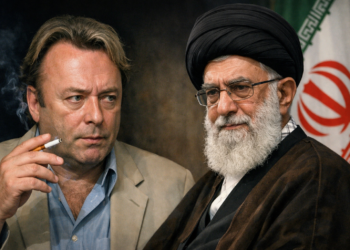


Christopher Hitchens, an intellectual force of nature, was a British-American author, journalist, and literary critic whose career spanned over four decades. Renowned for his formidable intellect, biting wit, and uncompromising polemical style, Hitchens became a towering figure in public discourse, engaging with subjects ranging from religion and politics to literature and history with unwavering conviction. His prolific output, characterized by eloquent prose and fearless argumentation, cemented his reputation as one of the most significant public intellectuals of his time. This exploration delves into the various facets of Hitchens’ life and work, examining the trajectory of his thought, the targets of his critiques, and the enduring legacy of his contributions to secularism, free speech, and critical inquiry.

Early Life and Intellectual Formation
Born in Portsmouth, England, in 1949, Christopher Eric Hitchens’ early life was steeped in the British tradition of rigorous education and intellectual debate. His upbringing, marked by his father’s naval career and a relatively privileged background, provided him with access to the finest educational institutions. He attended the Leys School in Cambridge before securing a place at Balliol College, Oxford University, where he studied Philosophy, Politics, and Economics (PPE). It was at Oxford that Hitchens truly began to hone his formidable debating skills and develop the intellectual tools that would define his career.
During his university years, Hitchens was drawn to the radical left, aligning himself with socialist movements and identifying as a Trotskyist. His early political affiliations were deeply rooted in a desire for social justice and a fierce opposition to totalitarianism, a theme that would persist throughout his life even as his political views evolved. He was profoundly influenced by the works of George Orwell, whose unsparing critiques of both fascism and Stalinism resonated deeply with Hitchens’ nascent anti-totalitarian sentiments. Other key influences included Thomas Paine, whose Enlightenment ideals of reason, liberty, and secular governance provided a foundational framework for Hitchens’ later critiques of religious authority.
His intellectual landscape was further shaped by a broad engagement with the Enlightenment thinkers, whose emphasis on empirical observation, critical reasoning, and individual autonomy profoundly informed his worldview. This period of intense intellectual development laid the groundwork for his future role as a polemicist and critic. In 1981, Hitchens moved to the United States, a transition that would significantly broaden his perspective and mark a new phase in his intellectual and political journey. The American landscape, with its distinct political culture and religious pluralism, offered new subjects for his trenchant analysis and further cemented his evolving perspectives on global affairs and human society.

The Journalist and Polemicist
Christopher Hitchens carved out an illustrious career as a journalist and polemicist, contributing to a vast array of prominent publications and becoming one of the most recognizable voices in contemporary commentary. His writings graced the pages of The Nation, a left-leaning magazine where he served as a columnist for many years, before his increasingly independent and often contrarian views led to his departure. He then found a prominent platform at Vanity Fair, where his essays and interviews garnered widespread attention, showcasing his ability to blend incisive analysis with engaging storytelling. His byline also appeared frequently in Slate, The Atlantic, The New York Times, and The Wall Street Journal, demonstrating his remarkable versatility and broad appeal across the political spectrum.
Hitchens’ mastery of the essay form was legendary. He possessed an unparalleled ability to dissect complex issues, weaving together historical context, philosophical arguments, and cutting observations into compelling narratives. His critical commentary was always marked by meticulous research, intellectual rigor, and an uncompromising commitment to challenging conventional wisdom. He relished his role as an iconoclast, consistently questioning authority and dismantling cherished myths, regardless of political affiliation or social standing. He was a genuine contrarian, not for the sake of mere opposition, but out of a deep-seated belief in the necessity of critical scrutiny and intellectual honesty.
His prolific output was astounding, encompassing thousands of articles, essays, and book reviews, alongside numerous books. He engaged fearlessly with public figures, often targeting those he perceived as hypocritical, intellectually dishonest, or morally compromised. No individual or institution was beyond the reach of his critical gaze, from political leaders and religious figures to literary luminaries. This fearless engagement, combined with his eloquent prose and intellectual firepower, established him as a dominant and often provocative voice in public discourse, ensuring that his articles were not merely read, but debated, discussed, and remembered.
Critiques of Religion (The New Atheism)
Christopher Hitchens’ most impactful and enduring contribution to public discourse arguably lies in his vehement and unrelenting critique of religion, making him a foundational figure in the New Atheism movement. His magnum opus, “God Is Not Great: How Religion Poisons Everything” (published in the UK as “God Is Not Great: The Case Against Religion”), served as a seminal text for a generation grappling with the implications of faith in a globalized, post-9/11 world. With an unparalleled blend of historical insight, philosophical rigor, and his characteristic caustic wit, Hitchens meticulously dismantled the foundational tenets of religious belief, arguing that religion, far from being a benign influence, is inherently irrational, dangerous, and detrimental to human progress.
Hitchens’ arguments against faith were multifaceted and uncompromising. He assailed religious dogma as a form of intellectual infantilism, demanding submission to ancient texts and unproven assertions rather than encouraging critical inquiry. He consistently highlighted the historical and ongoing role of religion in fostering ignorance, promoting violence, suppressing scientific advancement, and impeding moral development. For Hitchens, the notion of a divine creator was not merely improbable, but a deeply corrosive idea that encouraged superstition, self-deception, and a passive acceptance of suffering. He famously quipped that religion “poisons everything” – from individual morality and sexual freedom to political discourse and international relations.
He relished debates with prominent religious figures and apologists, often annihilating their arguments with a combination of historical evidence, logical deconstruction, and devastating sarcasm. His encounters with figures like Dinesh D’Souza, Tony Blair, and Rabbi Shmuley Boteach became legendary, showcasing his formidable rhetorical skills and his unwavering commitment to secular humanism. Hitchens did not merely disagree with religion; he saw it as an active enemy of reason and liberty, worthy of relentless intellectual combat. He refused to grant religion any special immunity from criticism, insisting that it be subjected to the same rigorous scrutiny as any other human construct.
Alongside Richard Dawkins, Sam Harris, and Daniel Dennett, Hitchens became known as one of the “Four Horsemen” of New Atheism. This quartet spearheaded a movement that aimed to bring atheism out of the academic closet and into mainstream public consciousness, challenging the societal deference often afforded to religious belief. Their collective impact was profound, sparking widespread debate, galvanizing secular communities, and empowering individuals to openly question and reject religious authority. Hitchens’ particular contribution was his unmatched ability to articulate the case for atheism not merely as a lack of belief, but as a robust, ethically sound, and intellectually liberating worldview, all delivered with a devastating elegance that made his critiques both intellectually compelling and profoundly entertaining.

Political Evolution and Controversies
Christopher Hitchens’ political journey was a complex and often contradictory evolution, beginning with a staunch commitment to Trotskyism and culminating in a stance that defied easy categorization. His early years were defined by his involvement with the far left, driven by an anti-imperialist and anti-totalitarian fervor. Yet, as he matured, his critiques became increasingly independent, less constrained by party lines or ideological dogmas. He famously and ferociously criticized figures across the political spectrum, demonstrating an unwavering commitment to what he perceived as truth and justice, even if it meant alienating former allies.
His blistering condemnations of Bill Clinton, particularly regarding the Monica Lewinsky scandal and the perceived moral failings of the administration, shocked many on the left who expected solidarity. Hitchens accused Clinton of moral turpitude and a profound disrespect for the office, publishing “No One Left to Lie To: The Triangulations of William Jefferson Clinton.” Similarly, his excoriating analysis of Henry Kissinger, whom he branded a war criminal in “The Trial of Henry Kissinger,” showcased his relentless pursuit of accountability for powerful figures. Perhaps most controversially, his relentless campaign against Mother Teresa, whom he depicted as a fraud and an ally of corrupt power in “The Missionary Position: Mother Teresa in Theory and Practice,” demonstrated his willingness to challenge even the most universally admired icons, peeling back layers of hagiography to reveal what he believed to be a darker truth.
The defining rupture in his political allegiances, however, came with his controversial support for the Iraq War in 2003. A fierce critic of Islamofascism and a staunch interventionist on humanitarian grounds (as demonstrated by his support for intervention in Bosnia and Kosovo), Hitchens saw Saddam Hussein’s regime as a tyrannical threat that needed to be overthrown. This stance alienated him from large swathes of the left, who viewed the war as an imperialist folly. He was accused of abandoning his socialist principles, but Hitchens countered that his position was consistent with his lifelong anti-totalitarianism, seeing the removal of Saddam as a liberation. This period cemented his reputation as a political maverick, a figure who prioritized intellectual integrity and what he saw as moral imperatives over ideological consistency or tribal loyalty.
Throughout his political evolution, one constant remained his unwavering commitment to free speech and anti-totalitarianism. He defended the right to offend, even when he found the content repugnant, arguing that censorship and the suppression of ideas were far more dangerous than any spoken word. His fierce opposition to regimes like the Soviet Union, North Korea, and Iran, and his later critiques of radical Islam, stemmed from a consistent belief that tyranny, whether secular or religious, was the ultimate enemy of human liberty and dignity. Hitchens refused to be boxed in, always demanding that ideas, not individuals or groups, be subjected to the most rigorous and unforgiving scrutiny.
Literary Critic and Essayist
Beyond his formidable reputation as a polemicist, Christopher Hitchens was a profound literary critic and an essayist of extraordinary breadth and depth. His extensive knowledge of literature, history, and philosophy underpinned every piece he wrote, allowing him to draw connections and offer insights that often eluded others. His work as a literary critic was characterized by a genuine passion for the written word, combined with his customary intellectual rigor and an unsparing honesty.
He penned several biographical and critical works that showcased his command of his subjects. His examinations of figures such as Thomas Paine, George Orwell, and Thomas Jefferson were not mere chronological accounts but rather deep dives into their intellectual legacies, their contradictions, and their enduring relevance. In these biographies, Hitchens often found kindred spirits – individuals who challenged convention, championed reason, and stood against tyranny. His critical appreciation of these figures often highlighted their Enlightenment ideals and their contributions to secular thought and individual liberty, filtering their lives through his own sharp analytical lens.
His essays, collected in various volumes like “Prepared for the Worst” and “Love, Poverty, and War,” explored an astonishing range of topics. From the minutiae of culture to the grand sweep of global politics, from personal reflections on the human condition to incisive critiques of societal trends, Hitchens’ essays were always vibrant, engaging, and thought-provoking. He possessed a rare ability to elevate seemingly mundane subjects into profound intellectual discussions, making even the most challenging topics accessible and compelling.
The art of the review was another arena where Hitchens excelled. He approached book reviews not as mere summaries but as opportunities for wider intellectual engagement. His reviews were often mini-essays in themselves, offering trenchant analyses of the author’s arguments, placing the work in historical context, and often using the book as a springboard for his own broader reflections. Whether praising a work of genius or demolishing a piece he deemed intellectually dishonest, his critical appreciation was always marked by a deep respect for literature and a commitment to upholding the highest standards of intellectual discourse.
Style, Rhetoric, and Debating Prowess
Christopher Hitchens’ indelible mark on public discourse was inextricably linked to his distinctive and formidable style, his mastery of rhetoric, and his unparalleled prowess as a debater. His prose was immediately recognizable, characterized by a characteristic use of wit that could be both playful and devastating, irony that cut to the core of hypocrisy, and a deep, often searing sarcasm that left no room for ambiguity. He wielded language as a precision instrument, capable of surgical dissection or broad, sweeping condemnation, always with an almost classical elegance.
His eloquence was legendary, a testament to his vast vocabulary, his command of historical allusions, and his ability to construct arguments with an architectural precision. Hitchens’ writing was imbued with formidable intellectual firepower, each sentence often packed with layers of meaning and informed by a vast reservoir of knowledge across literature, history, and philosophy. He did not merely state opinions; he built intricate cases, buttressing his assertions with evidence and logic, even when that logic led him to profoundly unpopular conclusions.
What truly set Hitchens apart was his direct, unapologetic, and often confrontational approach. He had no patience for euphemism, obfuscation, or intellectual cowardice. If he believed an idea was wrong, or a person was acting with ill intent, he said so, plainly and forcefully. This directness, while sometimes perceived as abrasive, was a core part of his intellectual honesty and his commitment to unvarnished truth. He saw it as his duty to challenge, provoke, and upset if it meant shining a light on uncomfortable realities.
His mastery of the spoken word and public debate was perhaps where his talents shone brightest. Whether on television, radio, or lecture hall stages, Hitchens was a mesmerizing orator. His rich baritone, his perfectly timed pauses, and his ability to construct spontaneous, complex arguments in real-time made him a formidable opponent. He could dismantle an adversary’s points with precision, ridicule their inconsistencies with devastating humor, and elevate the discussion with erudition – all while appearing utterly at ease. His debates were not just arguments; they were intellectual performances, drawing in audiences and leaving an undeniable impact on those who witnessed his formidable rhetorical power.

Legacy and Influence
Christopher Hitchens’ legacy continues to reverberate in the spheres of secularism, atheism, and public discourse long after his passing in 2011. He played a pivotal role in bringing atheism into the mainstream, transforming it from a niche philosophical stance into a vibrant and vocal intellectual movement. His relentless critiques of religion, articulated with such intellectual force and literary flair, continue to embolden those who question faith and advocate for a purely secular public square. He fundamentally shifted the terms of the debate, forcing a more rigorous examination of religious claims and their societal impact.
The enduring relevance of his critiques and arguments is undeniable. In an increasingly polarized world, his call for independent thought, critical scrutiny, and an unwavering commitment to reason remains as pertinent as ever. His warnings against totalitarianism, whether from the left, the right, or religiously inspired, continue to serve as vital intellectual bulwarks. His championing of free speech, even for ideas he abhorred, stands as a testament to his belief in the marketplace of ideas as the ultimate arbiter of truth. Students of political science, philosophy, and journalism continue to engage with his vast body of work, finding in it both inspiration and challenge.
His memoir, “Hitch-22: A Memoir,” published shortly before his death, offered a poignant and often witty reflection on his extraordinary life. It provided insights into his intellectual journey, his personal relationships, and the convictions that shaped his worldview. The book allowed readers to connect with the man behind the formidable public persona, revealing his vulnerabilities and his deep-seated humanity.
Ultimately, Christopher Hitchens continues to inspire independent thought and intellectual courage. He demonstrated that it is possible to hold unpopular opinions with conviction, to engage in fierce debate without resorting to personal attacks (though he was not above them), and to live a life dedicated to the relentless pursuit of truth. His legacy encourages us to question authority, challenge dogma, and defend the principles of reason and liberty with all the intellectual firepower we can muster, urging us to never shy away from the most difficult questions life presents.