


There was a time—perhaps partly imagined—when politics at least pretended to be an argument about ideas. Today it resembles a talent show for the morally unencumbered. The winner is not the wisest statesman, nor even the most cunning tactician, but the individual best able to convert grievance into spectacle. And spectacle, in our era, is indistinguishable from power.
The tragedy is not merely that demagogues exist. They always have. The tragedy is that the surrounding culture now conspires to reward them. We inhabit what might be called the Republic of Noise: a society in which volume substitutes for validity and repetition masquerades as truth. The politician who shouts the loudest is assumed to feel the most deeply; and the one who feels the most deeply is presumed to care the most sincerely. This is nonsense, of course. The loudest voice is often merely the emptiest vessel.
It would be comforting to blame this decline solely on social media, as though Twitter or its successors were malignant spirits conjured from the ether. But that would absolve us too easily. Technology does not degrade public discourse; it amplifies what is already there. If our conversations are shallow, it is because we have permitted them to be so. If our leaders are theatrical, it is because we reward theatrics. The algorithm is only a mirror—an unflattering one, certainly, but a mirror nonetheless.
Consider the peculiar modern obsession with “authenticity.” We are told to admire politicians who “say what they really think,” as though unfiltered impulse were a virtue rather than a symptom. The ancient Greeks invented rhetoric precisely because they understood that thought must be disciplined before it is made public. To celebrate unfiltered speech is to celebrate intellectual laziness. It is the equivalent of praising a surgeon for operating without washing his hands.
Authenticity, as it is marketed today, is nothing more than performance stripped of polish. It is theatre presented as candor. The politician who insults, who sneers, who reduces complex questions to playground taunts is hailed as “refreshing.” Refreshing, that is, to those weary of nuance. The result is a political culture in which subtlety is treated as weakness and doubt as betrayal.
And yet, doubt is the beginning of wisdom. The capacity to question one’s own assumptions—to entertain the possibility of error—is the mark of intellectual adulthood. The demagogue, by contrast, thrives on certainty. He offers simple answers to complicated problems because simplicity sells. He assures his audience that their frustrations have a single cause and a single solution. He does not invite thought; he demands applause.
The more alarming development is not that such figures exist, but that institutions once designed to restrain them now indulge them. The press, which should serve as a skeptical interlocutor, often behaves as a megaphone. The opposition, rather than articulating an alternative vision, frequently descends into moral panic, thereby strengthening the very spectacle it claims to oppose. Thus the cycle continues: outrage fuels coverage, coverage fuels prominence, prominence fuels outrage.
One might ask whether the public itself bears responsibility. The answer, though unfashionable, is yes. Democracies do not decay solely because of wicked leaders; they decay because citizens lower their expectations. When we demand entertainment rather than argument, we receive entertainers rather than thinkers. When we prioritize tribal loyalty over empirical evidence, we forfeit the right to complain about misinformation. Freedom of speech, after all, does not guarantee freedom from foolishness.
It is tempting, in moments of frustration, to romanticize the past. But nostalgia is a poor substitute for analysis. The past was hardly an Eden of rational discourse. What distinguishes the present is not the existence of folly, but its normalization. The absurd is no longer shocking; it is routine. Statements that would once have ended careers are now shrugged off as mere “gaffes.” The boundary between seriousness and satire has dissolved.
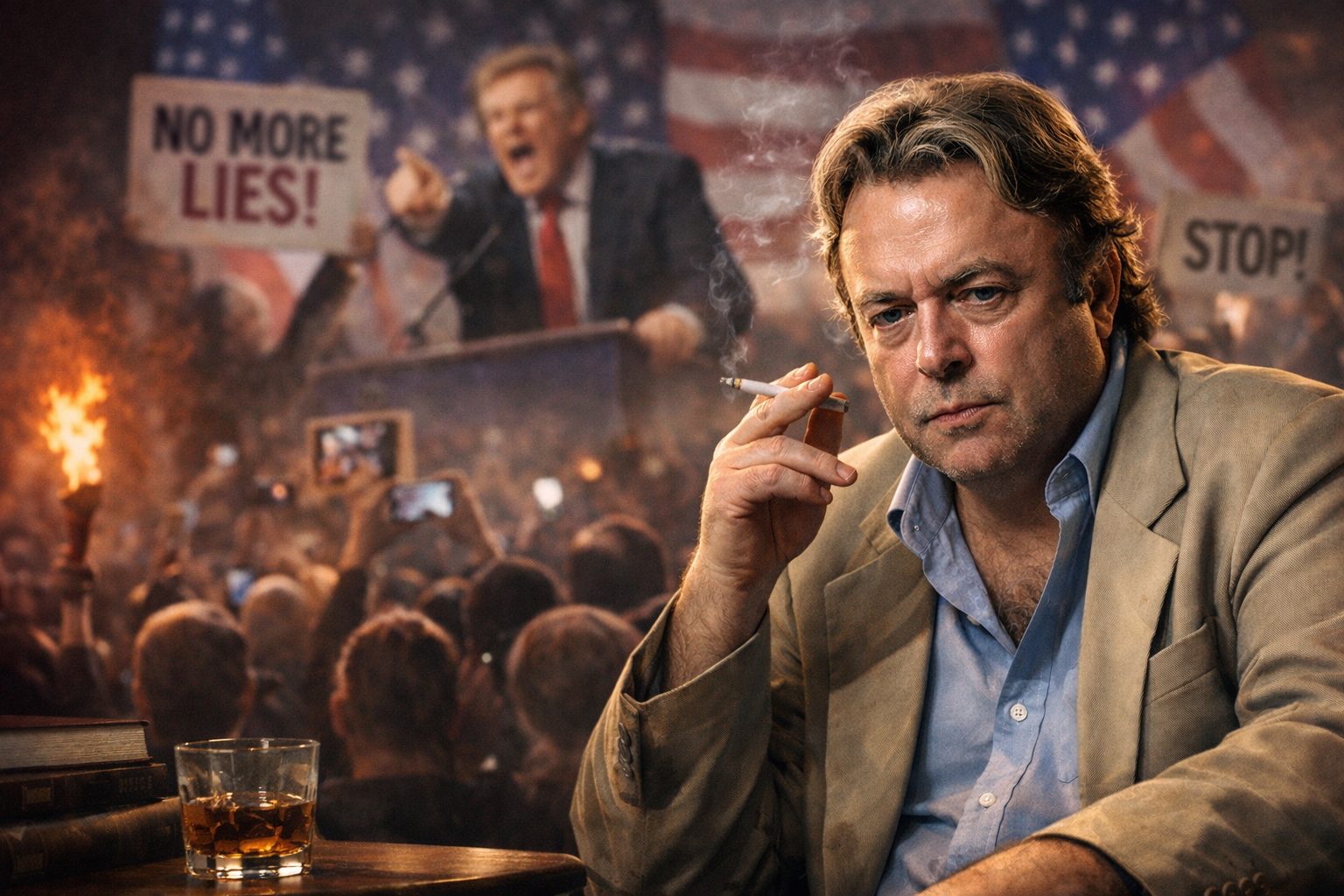
What, then, is to be done? The solution does not lie in censorship. Silencing fools does not make them wise; it merely transforms them into martyrs. The remedy is more demanding: it requires a revival of intellectual standards. It requires citizens who insist on evidence, who resist the seduction of easy answers, who regard politics not as a blood sport but as a collective enterprise. Above all, it requires courage—the courage to criticize one’s own side as vigorously as the other.
The Republic of Noise will not quiet itself. It thrives on our passivity. If we wish for something better, we must cultivate it deliberately: in classrooms, in newsrooms, in living rooms. We must rediscover the unfashionable virtues of patience, skepticism, and reason. These are not glamorous qualities. They do not trend. But they are the only antidotes to a culture that confuses decibels with depth.
In the end, politics is not merely a reflection of leaders; it is a reflection of us. If we tolerate buffoonery, we shall be governed by buffoons. If we reward cruelty, we shall be ruled by the cruel. The health of a republic depends less on the brilliance of its politicians than on the intellectual integrity of its citizens. And integrity, unlike noise, cannot be manufactured overnight.
The choice, therefore, is stark. We may continue applauding the loudest fool in the room—or we may rediscover the quiet discipline of thought. One path leads to perpetual spectacle. The other leads, perhaps slowly and imperfectly, toward something resembling a serious society. The decision is ours, though we may yet pretend otherwise.