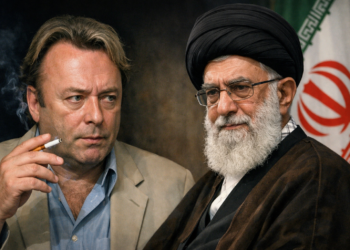


Christopher Hitchens, often simply known as ‘Hitch,’ was an iconoclast, orator, and provocateur whose intellectual firepower and unparalleled rhetorical skill left an indelible mark on the public square. A self-proclaimed “contrarian by temperament,” he relished dismantling received wisdom, whether it stemmed from political orthodoxy or religious dogma. His trenchant critiques spared no sacred cows, meticulously dissecting the pieties of his age with a rapier wit and an encyclopedic knowledge of history, literature, and philosophy.

This deep dive into Hitchens’ intellectual legacy will unpack his formidable critiques of politics, religion, and faith, demonstrating how he consistently challenged the prevailing narratives. We will explore his evolution from a revolutionary socialist to a proponent of certain interventions, his relentless war against religious belief, and his unwavering commitment to secular humanism. Central to understanding Hitchens is appreciating his inimitable rhetorical weaponry: a devastating combination of satire, irony, erudition, and intellectual pugilism that made him one of the most compelling and confounding voices of his generation. Prepare to encounter an intellect that demanded, above all else, rigorous thought and an unwavering commitment to truth, no matter how uncomfortable.
Religion: The ‘Divine’ Delusion and Its Earthly Horrors
For Christopher Hitchens, religion was not merely a private affair or a benign cultural artifact; it was, in his memorable and unequivocal phrase, ‘poison.’ His seminal work, “God Is Not Great: How Religion Poisons Everything,” laid bare his comprehensive case against faith, articulating with scathing precision why he believed it to be a grave intellectual error and a force for considerable harm in the world. He was not content to merely observe the irrationality of belief; he actively and relentlessly sought to deconstruct it, pulling back the veil on what he saw as its inherent contradictions and deleterious societal effects.
Hitchens’ critique of organized faith was multifaceted, targeting what he perceived as its systemic hypocrisy, its historical propensity for oppression, and its corrosive effect on intellectual courage. He argued that the very foundation of religious belief — a reliance on unquestioned dogma and revealed truth — fostered an environment antithetical to reason, skepticism, and human progress. From the Crusades to contemporary sectarian conflicts, he saw a direct line connecting religious conviction with brutality and intolerance, maintaining that if religion hadn’t existed, “the world would be a better place without it.”
His broadsides were often intensely personal and devastatingly precise. Mother Teresa, canonized by many, was for Hitchens a purveyor of a ‘cult of suffering,’ who reveled in the misery of the poor rather than seeking to alleviate its root causes. He depicted her not as a saint, but as a rigid ideologue who opposed contraception and abortion, thereby exacerbating the very conditions she claimed to address. Similarly, he launched a relentless assault on Islamic totalitarianism, viewing it as a clear and present danger to secular values and free expression, particularly after the events of 9/11. The Vatican’s historical abuses, its obstruction of scientific inquiry, and its ongoing resistance to modern values also drew his withering fire, always contextualizing these criticisms within a broader historical narrative of clerical power and its corrupting influence.
The problem of faith, for Hitchens, transcended mere theological quibbles. It was fundamentally a question of epistemology: how do we know what we claim to know? To believe something without evidence, or worse, in defiance of it, was not a virtue but a grave intellectual error. He contended that faith encouraged credulity, discouraged independent thought, and demanded an intellectual surrender that was ultimately detrimental to human autonomy and the pursuit of truth. For Hitchens, humanity had the capacity and the moral imperative to construct its own ethics and meaning, free from the dictates of ancient texts or supernatural entities. He was, in essence, demanding intellectual honesty and moral courage in the face of what he saw as comforting, yet ultimately destructive, illusions.

Politics: From Revolutionary Idealism to Pragmatic Interventionism
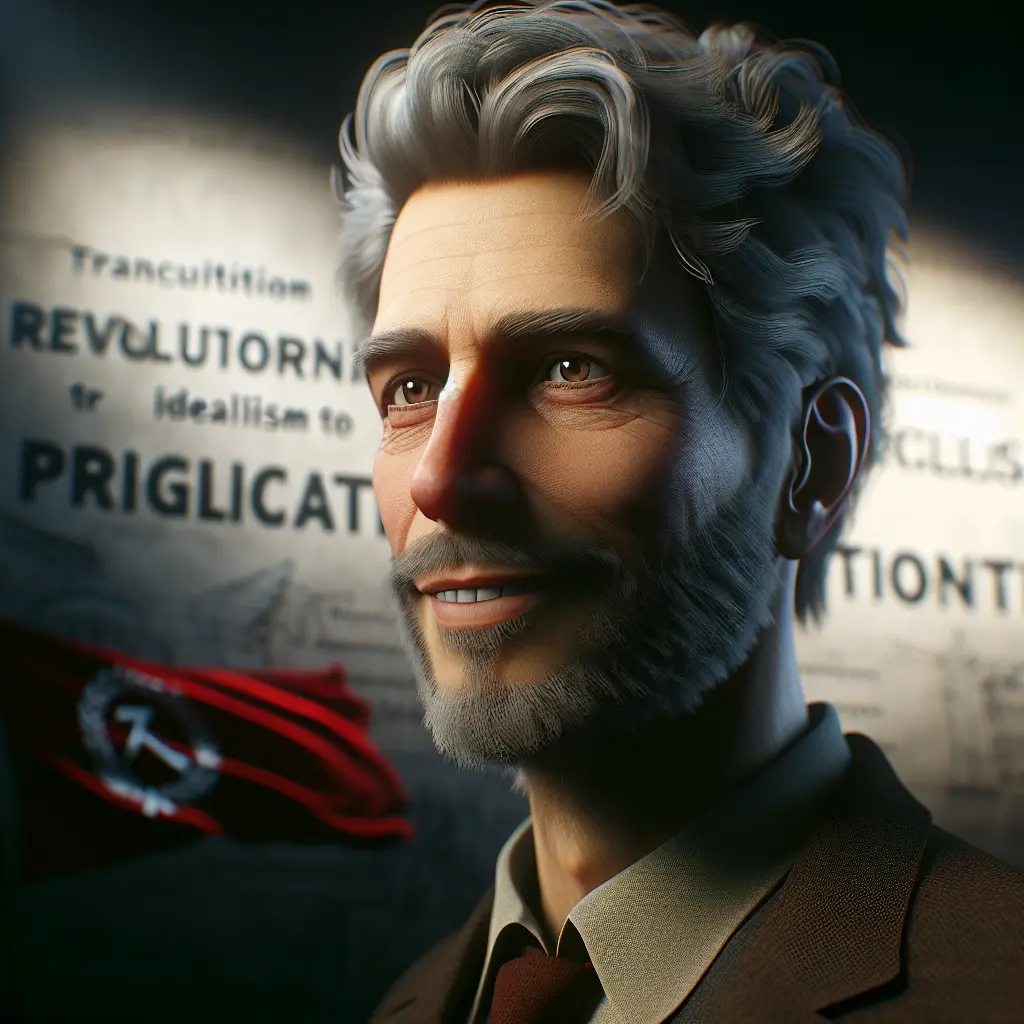
Christopher Hitchens’ political journey was as complex and controversial as the man himself, defying easy categorization. He began his public life as an unrepentant socialist, a firebrand of the New Left, deeply embedded in the anti-war movements and socialist circles of the 1960s and 70s. This early idealism, however, was tempered and ultimately disillusioned by the grim realities of authoritarian regimes that claimed to operate under the banner of socialism. The Soviet Union’s gulags, the Khmer Rouge’s atrocities, and the repressive nature of other communist states solidified his unwavering critique of totalitarianism in all its forms. He ruthlessly exposed the intellectual laziness and moral cowardice of what he termed ‘useful idiots’ – Western sympathizers who turned a blind eye to the crimes committed in the name of a supposed socialist paradise.
His deep-seated anti-totalitarianism remained a constant, even as his political allegiances shifted. He saw fascism and communism as two sides of the same authoritarian coin, both demanding absolute submission and crushing individual liberty. It was this bedrock principle that informed his most controversial pivot: his support for the Iraq War and the broader ‘War on Terror.’ Many former allies viewed this as an inexplicable betrayal, a leap from the left to the neoconservative right. Hitchens, however, framed it not as a conversion, but as a consistent application of his lifelong anti-totalitarian convictions. He saw Saddam Hussein’s regime as a brutal, genocidal dictatorship that posed an immediate threat to its own people and regional stability. For him, intervening to depose such a regime, particularly in the wake of 9/11 and the clear dangers of Islamist extremism, was not an act of imperialism but a moral imperative, a necessary evil to confront a greater one. His arguments were, as ever, meticulously researched and forcefully articulated, even for those who fundamentally disagreed with his conclusions.
Throughout his political evolution, certain core values remained sacrosanct for Hitchens. He was a fierce and uncompromising champion of free speech, viewing it as the indispensable cornerstone of any genuinely democratic and enlightened society. He railed against censorship and political correctness, arguing that the unfettered exchange of ideas, however offensive to some, was essential for progress and truth. His commitment to secularism was equally unwavering, seeing the separation of church and state as a vital bulwark against religious encroachment on public life and individual liberty. He was a true son of the Enlightenment, constantly advocating for reason, empirical evidence, and individual autonomy against the forces of dogma, superstition, and collective conformity. Whether challenging the pieties of the left or the right, Hitchens remained an independent intellectual, bound by no party line, but rather by what he perceived as the dictates of truth and reason, holding both power and conventional wisdom to account with equal ferocity.
Morality Without Mumbo Jumbo: Humanism and the Secular Ethic
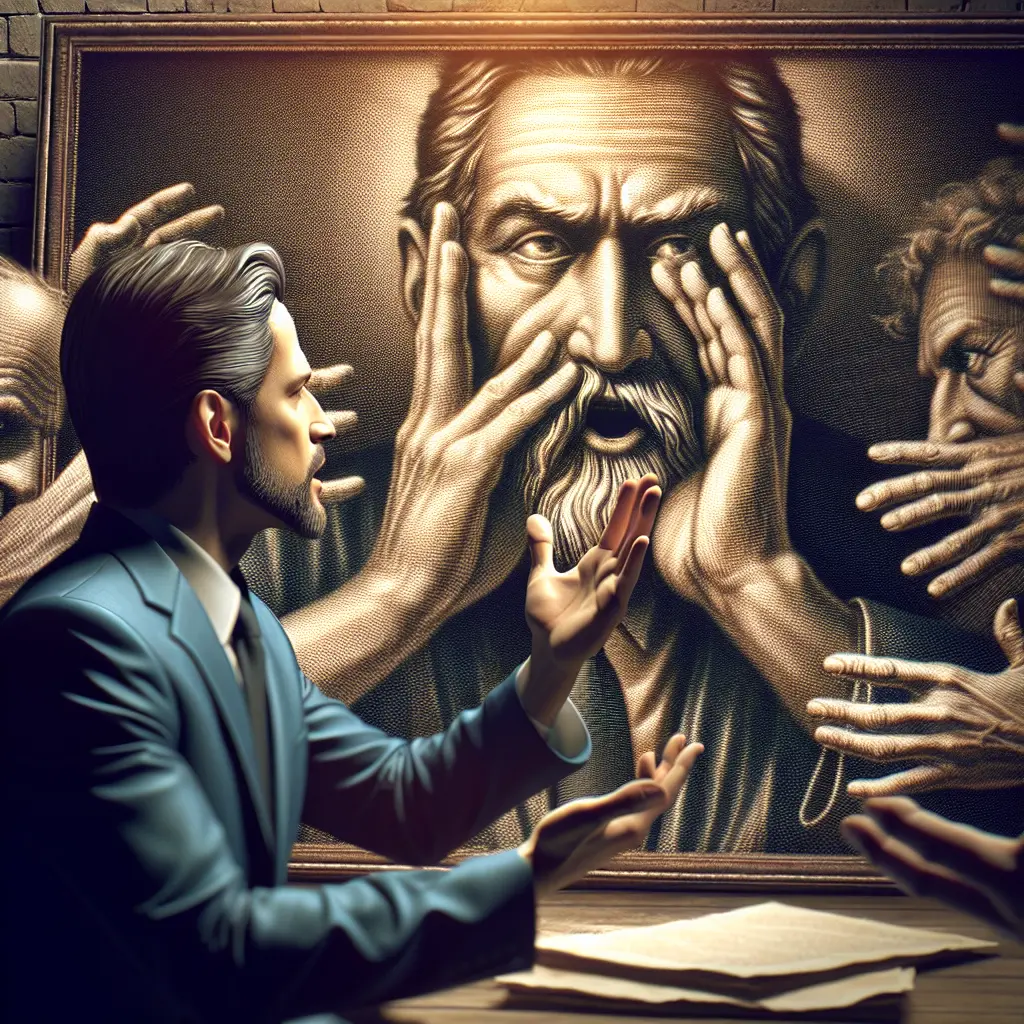
Christopher Hitchens passionately argued for a morality untethered from divine dictates, a secular ethic rooted firmly in human reason, empathy, and our shared capacity for mutual aid. He found the notion of divine command theory—that actions are moral simply because a god decrees them—to be not only intellectually bankrupt but often morally repugnant. For Hitchens, the arbitrary and frequently immoral acts attributed to the God of Abrahamic faiths, as recounted in sacred texts, served as compelling evidence that one could not look to the heavens for a truly just or compassionate ethical framework. To worship such a being, or to derive one’s ethics from such capricious pronouncements, was to abdicate human responsibility and intellectual integrity.
Instead, Hitchens posited that the human capacity for ethics was an innate, evolved trait, sharpened by millennia of social interaction and rational thought. Empathy, the ability to understand and share the feelings of another, served as a foundational pillar, allowing us to recognize the suffering of others and act to alleviate it. Reason provided the framework for evaluating actions, predicting consequences, and constructing consistent moral principles. Mutual aid, the cooperative effort for shared benefit, demonstrated that humans are inherently capable of altruism and collective well-being without the promise of heavenly reward or the threat of eternal damnation. These capacities, he argued, were far more reliable and morally robust than any divine edict, which often required blind faith and sometimes sanctioned horrific deeds.
Hitchens was a steadfast defender of the individual, championing autonomy, skepticism, and the right to intellectual inquiry against any force that sought to curtail them. He believed that moral courage lay not in meekly submitting to external authority, be it religious or political, but in independently grappling with ethical dilemmas, forming one’s own reasoned judgments, and standing by them. The rejection of intellectual surrender was a recurring theme; for Hitchens, to accept dogma unquestioningly was to diminish one’s humanity. True morality, he contended, emerged from the arduous, often uncomfortable process of critical thought and empathetic engagement with the real world, rather than from the soothing but ultimately stultifying embrace of ancient myths. His humanism was a defiant call for humanity to take full responsibility for its own moral compass, recognizing both the challenge and the immense dignity in forging an ethical path without recourse to ‘mumbo jumbo.’
The Art of the Argument: His Literary and Oratorical Arsenal
To engage with Christopher Hitchens was to encounter a mind honed to an almost frightening degree, armed with a literary and oratorical arsenal that few could rival. He was a master of the English language, capable of crafting essays that were both exquisitely precise and utterly devastating. His prose was characterized by its elegant syntax, its erudite vocabulary, and its ruthless clarity, allowing him to dismantle complex arguments or expose intellectual fraud with surgical precision. Whether in print or on the debate stage, he wielded words like a weapon, each sentence carefully constructed to advance his argument, often leaving his opponents intellectually eviscerated.
Satire, irony, and the perfectly placed insult were not mere flourishes for Hitchens; they were essential tools in his quest for truth. He understood that humor, particularly of the dark and biting variety, could strip away pretensions and expose hypocrisy with far greater effect than earnest sermonizing. His quips and cutting remarks were never gratuitous; they served to underscore a point, to deflate pomposity, or to reveal the absurdity of a particular belief. He famously quipped, when asked what he would say to God if he found himself in heaven, “I would say, ‘Don’t you think that you’ve kept this show going a little long? It’s time for you to fold your tent.'” Such remarks were not just clever; they were arguments encapsulated in a memorable, thought-provoking package.
His ability to draw on history, literature, and philosophy to dismantle dogma was unparalleled. Hitchens possessed an encyclopedic knowledge, allowing him to weave together disparate facts, historical precedents, and philosophical concepts into a coherent, formidable narrative. He would reference Gibbon and Paine in the same breath, invoke Orwell and Marx, and cite ancient Greek philosophers to illuminate contemporary follies. This breadth of knowledge allowed him to contextualize arguments, to trace the lineage of ideas, and to expose the historical weaknesses or contradictions of religious and political doctrines. His debates were not just clashes of opinion, but intellectual spectacles where profound erudition met relentless logic.
Moreover, Hitchens was a keen diagnostician of logical fallacies. He expertly exposed rhetorical tricks and intellectual traps, such as the “No True Scotsman” fallacy, where an argument is arbitrarily protected from refutation by shifting the definition of its terms. He would relentlessly pinpoint straw man arguments, ad hominem attacks, and appeals to emotion, always redirecting the conversation back to the evidence and the merits of the actual argument. For Hitchens, intellectual honesty was paramount, and he would brook no obfuscation or evasion. His legacy is not just in what he argued, but in *how* he argued, setting a towering standard for intellectual rigor and rhetorical prowess that continues to inspire and challenge.
Legacy: The Enduring Provocation
Christopher Hitchens’ impact on atheism, secularism, and public discourse is undeniable and enduring. He galvanized a new generation of non-believers, lending intellectual weight and rhetorical flair to the “New Atheism” movement. His unapologetic critiques of religion, delivered with wit and conviction, helped to destigmatize atheism and bring secular arguments into mainstream conversation, encouraging countless individuals to question long-held beliefs. He elevated debates on faith and reason from insular academic discussions to public spectacles, demonstrating that these were matters of urgent societal importance.
Beyond his specific arguments against religion, Hitchens left several lasting intellectual contributions. The most famous is perhaps ‘Hitchens’ Razor,’ an epistemological principle stating: “What can be asserted without evidence can be dismissed without evidence.” This simple yet powerful maxim has become a fundamental tool in skeptical inquiry, advocating for intellectual rigor and a high bar for claims made about reality, particularly those concerning the supernatural or unsubstantiated political narratives. It embodies his demand for empirical grounding and rational justification in all areas of thought.
Yet, Hitchens’ legacy is not without its contradictions and controversies, which he himself seemed to embrace rather than shy away from. His trajectory from socialist rebel to supporter of the Iraq War confounded many, and his unyielding stances often provoked heated opposition. He refused to be easily categorized or to adhere to any predictable ideological playbook, a trait that made him both exhilarating and infuriating. He was a man of fierce loyalties and equally fierce disagreements, often falling out with former friends and allies over matters of principle. This refusal to be pigeonholed, to maintain an independent intellectual compass even when it meant alienating vast swathes of opinion, cemented his reputation as a genuine maverick.
Ultimately, Hitchens’ enduring legacy is a powerful call to intellectual vigilance and the constant questioning of authority, whether political, religious, or cultural. He demonstrated the profound importance of critical thinking, reasoned debate, and the courage to speak uncomfortable truths. In an age of increasing polarization and echo chambers, his voice remains a potent reminder of the value of an unconstrained intellect, a sharp wit, and an unwavering commitment to reason. Christopher Hitchens may be gone, but the provocation he embodied, the relentless pursuit of clarity and truth, continues to reverberate, urging us all to think more deeply, question more rigorously, and argue more effectively.
Mọi chi tiết xin vui lòng liên hệ:
|