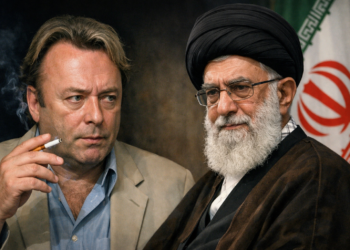


Christopher Hitchens, an intellectual colossus whose career spanned decades and continents, remains a towering figure in journalism and public discourse. From his early days as a firebrand leftist in Britain to his later incarnation as a staunch defender of secularism and a controversial voice on foreign policy, Hitchens carved out a unique and indelible niche. He was not merely a reporter or an analyst; he was a provocateur, a polemicist, and a literary craftsman who wielded words with surgical precision and devastating wit. This outline seeks to explore the multifaceted journey of a man who refused to be pigeonholed, consistently challenging orthodoxies from across the political spectrum, and leaving behind a legacy that continues to spark debate and inspire critical thought. His relentless pursuit of truth, often expressed with an unapologetic ferocity, cemented his status as one of the most compelling and consequential public intellectuals of his time.

Early Life and Formative Years as a Journalist
Birth and Education: Oxford and Early Intellectual Awakening
Born in Portsmouth, England, in 1949, Christopher Eric Hitchens was the son of a naval officer and a mother he adored. His early education at The Leys School in Cambridge, followed by Balliol College, Oxford, where he read Philosophy, Politics, and Economics (PPE), proved instrumental in shaping his formidable intellect. Oxford was not just a place of academic study but a crucible where his nascent political convictions, already sharpened by a keen critical mind, were rigorously tested and refined. It was here that he began to cultivate the voracious reading habits, the dialectical agility, and the oratorical prowess that would define his public persona. His university years were marked by intense intellectual curiosity and a burgeoning radicalism, setting the stage for a life dedicated to the clash of ideas.
The New Left and Early Political Activism: Influences and Ideologies
Hitchens emerged onto the intellectual scene during the vibrant, turbulent era of the New Left. Deeply influenced by Marxist thought, the anti-war movement, and the global revolutionary currents of the late 1960s, he quickly became a prominent voice within student activism. His ideologies were forged in the crucible of protest against the Vietnam War, apartheid, and the prevailing conservative establishments. He was drawn to figures like George Orwell for their clarity and moral courage, and to various socialist thinkers whose critiques of capitalism and imperialism resonated deeply. This period was crucial in instilling in him a profound skepticism towards authority and an unwavering commitment to speaking truth to power, tenets that would, paradoxically, evolve and adapt throughout his career but never truly vanish.
First Forays into Journalism: Contributions to *International Socialism* and *New Statesman*
His early journalistic endeavors saw him contributing to publications at the forefront of leftist thought, most notably *International Socialism* and the prestigious *New Statesman*. These platforms provided Hitchens with the opportunity to hone his craft, transforming raw political passion into incisive prose. He quickly distinguished himself through his articulate arguments and his willingness to challenge received wisdom, even within his own ideological camp. His articles at this time often focused on critiques of capitalism, foreign policy interventions, and social injustices, showcasing an early mastery of political analysis and a burgeoning capacity for polemic. It was clear even then that his writing was not just commentary but a form of intellectual combat.
Developing a Distinctive Voice: Satire, Critique, and Literary Flair
From the outset, Hitchens’s writing was marked by a distinctive style characterized by sharp satire, relentless critique, and an undeniable literary flair. He possessed an extraordinary command of the English language, deploying a vast vocabulary with precision and wit. His prose was often adorned with classical allusions, historical references, and a devastatingly ironic tone that could puncture pomposity with a single, perfectly aimed phrase. Whether dissecting the hypocrisy of politicians or exposing the fallacies of prevailing dogmas, he wrote with a theatricality and intellectual bravado that made his work immensely readable and profoundly impactful. This early development of his unique voice foreshadowed the iconic polemicist he would become.

The American Years and *The Nation* Era
Relocation to the United States: A New Battlefield for Ideas
In 1981, Christopher Hitchens relocated to the United States, a move that would prove pivotal in his career and intellectual trajectory. The transition from the more ideologically defined landscape of British leftism to the diverse, often perplexing, American political scene provided him with a new, expansive battlefield for ideas. He approached his adopted country with a characteristic blend of fascination and critical distance, finding ample fodder for his observational and analytical skills. America’s unique brand of patriotism, its complex social fabric, and its global influence became central subjects for his rigorous examination, allowing his voice to evolve and resonate on an international stage.
Columnist for *The Nation*: Sharpening His Critique of American Politics
Upon arriving in the US, Hitchens quickly became a prominent columnist for *The Nation*, a leading progressive magazine. His regular column provided him with a powerful platform to sharpen his critique of American politics, society, and foreign policy. During this period, he was a vocal critic of the Reagan administration, American interventionism in Latin America, and the perceived hypocrisies of the political establishment. His writing for *The Nation* showcased his ability to dissect complex political issues with clarity, wit, and often, savage indignation. He fearlessly challenged conventional wisdom, earning him a reputation as an intellectual maverick even among his ideological allies.
Focus on Foreign Policy: Central America, the Middle East, and Imperialism
A significant portion of Hitchens’s work during his American years, particularly during the 1980s and early 1990s, centered on foreign policy. He became a leading critic of US involvement in Central America, tirelessly exposing what he saw as imperialistic interventions and support for authoritarian regimes. His analysis extended to the Middle East, where he offered nuanced, albeit often scathing, critiques of regional conflicts, superpower proxy wars, and the geopolitical machinations that fueled them. He was an early and consistent voice against fundamentalist movements and for human rights, themes that would become even more central to his work later in life, albeit from a different ideological vantage point.
Engaging with American Culture and Society: From Presidents to Pundits
Beyond hard politics, Hitchens engaged deeply with American culture and society, often with a satirical eye. He wrote extensively on figures ranging from presidents like Nixon and Clinton to cultural icons and media pundits, dissecting their public personas and political implications. His essays often explored the unique aspects of American exceptionalism, its consumer culture, and its public intellectual life, always with an underlying commitment to discerning truth from rhetoric. He became a familiar face on television and radio, a formidable debater capable of holding his own against any interlocutor, further cementing his role as a public intellectual deeply embedded in, yet critically detached from, his adopted home.

The Evolution of a ‘Contrarian’ Journalist
From Left-Wing Maverick to Post-9/11 ‘War Hawk’
Perhaps the most defining, and certainly the most controversial, chapter in Christopher Hitchens’s intellectual journey was his dramatic evolution from a quintessential left-wing maverick to a vocal supporter of the Iraq War and the ‘War on Terror’ following the September 11 attacks. This shift perplexed many of his former allies and cemented his image as the ultimate contrarian. While some saw it as a betrayal of his socialist roots, Hitchens himself maintained that his core principles—anti-totalitarianism, secularism, and a defense of Enlightenment values—remained consistent, merely leading him to different conclusions in the face of new threats. He viewed Islamic extremism as a global fascist movement that demanded robust, even military, confrontation.
Critique of the ‘Soft Left’ and Shifting Alliances
His post-9/11 stance led him to become a fierce critic of what he termed the ‘soft left,’ lambasting those he felt were either equivocating on the nature of Islamist totalitarianism or succumbing to anti-Americanism. He found himself allied with neoconservatives on specific foreign policy issues, leading to a complex and often uncomfortable set of new alliances. He was unsparing in his condemnation of those on the left who, in his view, prioritized anti-imperialist dogma over the defense of universal human rights and secular principles against religious extremism. This period saw him challenge the pieties of his former comrades with the same intellectual rigor and rhetorical fire he had previously directed at the right.
Support for the Iraq War and the ‘War on Terror’: Controversial Stances
Hitchens’s outspoken support for the 2003 invasion of Iraq and the broader ‘War on Terror’ became the most contentious aspect of his later career. He argued passionately for intervention, believing that Saddam Hussein’s regime was a totalitarian menace that had to be overthrown, and that the war was a necessary front in the larger struggle against jihadist terror and for the liberation of oppressed peoples. His arguments, rooted in a blend of moral conviction, anti-totalitarian principles, and a belief in the necessity of force against tyranny, placed him squarely against the majority of his former intellectual peers. He articulated his views with unwavering conviction, even as the war’s justification and execution became increasingly problematic.
Defending Enlightenment Values and Secularism Against Allcomers
Throughout this ideological metamorphosis, one constant remained: Hitchens’s fervent defense of Enlightenment values, rationalism, and secularism. He saw the threat of religious fundamentalism, whether Islamic, Christian, or otherwise, as a direct challenge to human progress and individual liberty. His support for military intervention was often framed within this larger struggle to defend secular civil society against the encroaching darkness of religious dogma and totalitarian ideology. He was prepared to engage with anyone, from any political or religious background, who he believed posed a threat to the foundational principles of free inquiry, open debate, and the separation of church and state.

Master of Polemic and Literary Journalism
The Art of Argument: Wit, Erudition, and Intellectual Fearlessness
Christopher Hitchens was arguably the greatest polemicist of his generation, an artisan of argument whose craft was characterized by unparalleled wit, vast erudition, and an unshakeable intellectual fearlessness. He approached every subject with a prosecutor’s rigor and a poet’s flair, constructing arguments that were both devastatingly logical and breathtakingly eloquent. His debates were legendary, marked by an encyclopedic knowledge, a quicksilver mind, and a capacity to verbally eviscerate opponents while simultaneously entertaining and enlightening audiences. He reveled in the cut and thrust of intellectual combat, viewing it as essential to the pursuit of truth.
Long-Form Essays and Book Reviews: Dissecting Culture and Politics
While known for his sharp columns, Hitchens truly excelled in the long-form essay and book review. In publications like *Vanity Fair*, *The Atlantic*, and *The London Review of Books*, he dissected cultural phenomena, political figures, and literary works with a depth and originality that few could match. His reviews were not merely summaries but standalone works of criticism, often serving as springboards for broader reflections on history, morality, and the human condition. He could take on a biography of Thomas Jefferson, a new novel, or a political memoir, and transform it into an occasion for a profound and often provocative intellectual exploration.
Debates and Public Discourse: A Champion of Free Speech and Reason
As a public intellectual, Hitchens was a tireless champion of free speech and rational discourse. He believed that no idea should be immune from scrutiny, and that open debate, however uncomfortable, was the bedrock of a healthy society. He participated in countless debates, often against formidable opponents, on subjects ranging from religion and politics to historical revisionism. His performances were masterclasses in rhetoric, combining logical precision with a theatrical panache that captivated audiences. He understood that engaging in public discourse was not just about winning arguments, but about modeling the intellectual virtues of curiosity, skepticism, and courage.
Exploring Diverse Subjects: From Orwell to Mother Teresa, Jefferson to Clinton
Hitchens’s intellectual appetite was voracious, leading him to explore an astonishingly diverse range of subjects. He authored seminal works on figures like George Orwell, whom he admired for his moral clarity and anti-totalitarianism, and Thomas Jefferson, whose complex legacy he explored with characteristic nuance. He famously savaged Mother Teresa, challenging the hagiography surrounding her and exposing what he saw as her darker, more dogmatic impulses. And he offered relentless critiques of Bill and Hillary Clinton, whom he viewed as epitomizing a certain kind of political opportunism and corruption. No figure or institution, however revered, was safe from his piercing gaze and critical examination.

The Anti-Theist Crusader: Journalism on Religion
The Sustained Critique of Organized Religion: ‘God Is Not Great’
One of the most enduring and impactful aspects of Hitchens’s journalism was his sustained, blistering critique of organized religion. This culminated in his seminal 2007 book, ‘God Is Not Great: How Religion Poisons Everything,’ which became a foundational text for the New Atheism movement. In countless essays, columns, and debates, he argued that religion was not merely benign but demonstrably harmful, a source of conflict, ignorance, and oppression throughout history. He rejected the notion that faith offered any solace or moral guidance superior to secular ethics, seeing it instead as an elaborate system of wish-fulfillment and tribalism that actively hindered human progress.
Philosophical and Historical Arguments Against Faith
Hitchens marshaled a formidable array of philosophical and historical arguments against faith. He meticulously cataloged the crimes committed in the name of religion, from the Crusades to contemporary acts of terror, while also dissecting the logical inconsistencies and ethical failings of sacred texts. He drew upon his extensive knowledge of history, literature, and philosophy to demonstrate how religious dogma has often stifled scientific inquiry, encouraged misogyny, and perpetuated needless suffering. His critique was not a simple dismissal but a deeply informed, passionate intellectual assault on the very foundations of supernatural belief.
Debates with Religious Figures: Confronting Belief Systems
His anti-theist stance led him into numerous highly publicized debates with prominent religious figures, including Dinesh D’Souza, Tony Blair, and Rabbi Shmuley Boteach. These confrontations were electric, with Hitchens bringing his full intellectual arsenal to bear against belief systems he considered irrational and dangerous. He challenged his interlocutors not just on theological points but on the moral consequences of their faith, pressing them on issues like divine command theory, the problem of evil, and the role of religion in public life. He relished these intellectual battles, viewing them as vital exercises in exposing the inherent weaknesses of faith-based arguments.
Defending Secularism and Rational Thought in a World of Faith
Ultimately, Hitchens’s crusade against religion was a passionate defense of secularism, rational thought, and the primacy of human reason. He believed that the separation of church and state was not merely a legal principle but a philosophical necessity for a free and enlightened society. He consistently argued for an ethics derived from human empathy and reason, rather than divine decree, and advocated for a world where critical inquiry superseded blind faith. His tireless work in this arena solidified his reputation as one of the most eloquent and uncompromising champions of secular humanism in the modern era.
International Reporting and Global Affairs
Covering Conflicts and Human Rights Abuses Around the World
Beyond his polemics and cultural critiques, Christopher Hitchens was a dedicated international reporter, often venturing into perilous regions to cover conflicts and human rights abuses firsthand. His dispatches from war zones, totalitarian states, and areas of extreme deprivation provided vivid, unflinching accounts of human suffering and political oppression. He felt it was a journalist’s duty to bear witness, to lend a voice to the voiceless, and to expose the atrocities committed by regimes and factions alike. His commitment to reporting from the front lines added a crucial dimension of empirical grounding to his broader political analyses.
On-the-Ground Reporting from War Zones and Oppressed Nations
From Northern Ireland and Cyprus to the Middle East and the Balkans, Hitchens repeatedly put himself in harm’s way to report from oppressed nations and active war zones. His experiences provided him with a visceral understanding of the human cost of conflict and tyranny. He spoke with dissidents, victims, and combatants, weaving their stories into a tapestry of reporting that was both deeply empathetic and rigorously analytical. This on-the-ground perspective informed his nuanced understanding of geopolitical complexities and fueled his moral indignation against injustice, whether perpetrated by state actors or non-state groups.
Advocacy for Dissidents and Opponents of Totalitarian Regimes
A consistent thread throughout Hitchens’s international reporting was his unwavering advocacy for dissidents and opponents of totalitarian regimes. He championed figures like Salman Rushdie, exposing the barbarity of the Iranian fatwa, and stood in solidarity with those resisting authoritarian rule from Pinochet’s Chile to various Soviet bloc nations. His commitment to free expression and individual liberty meant he instinctively sided with those challenging state oppression, regardless of their specific ideology. He understood that the voices of the oppressed often carried the most profound truths.
Analysis of Geopolitics: A Skeptical Eye on Power Dynamics
Hitchens brought a characteristically skeptical eye to the analysis of geopolitics. He was adept at dissecting the power dynamics between nations, exposing the self-serving interests behind political rhetoric, and unmasking the hypocrisy of world leaders. Whether discussing the intricacies of Middle Eastern politics, the expansion of global capital, or the complexities of international law, he always sought to penetrate the surface narratives to reveal the deeper, often uncomfortable, truths. His geopolitical analysis was always informed by a deep historical consciousness and an unwavering commitment to anti-totalitarian principles.

Legacy and Enduring Influence on Journalism
Impact on Political Commentary and Public Intellectual Discourse
Christopher Hitchens’s impact on political commentary and public intellectual discourse is profound and undeniable. He redefined the role of the public intellectual, demonstrating that erudition could be combined with wit, moral seriousness with rhetorical flourish. He elevated political debate, challenging both pundits and academics to engage with ideas more rigorously and express them more eloquently. His fearless willingness to transgress ideological lines forced many to reconsider their own assumptions, making intellectual discourse richer and more challenging.
The ‘Hitchensian’ Style: A Standard for Eloquence and Provocation
The ‘Hitchensian’ style has become a benchmark for eloquence and provocation in journalism. Characterized by its vast vocabulary, intricate sentence structures, classical allusions, and devastating irony, it set a high standard for analytical prose. Journalists and writers continue to emulate his ability to combine serious intellectual inquiry with dazzling literary panache. His stylistic brilliance ensured that even when readers disagreed with him, they were compelled to engage with his arguments due to the sheer force and beauty of his language.
Relevance of His Critiques in Contemporary Political and Cultural Debates
Despite his passing, the relevance of Hitchens’s critiques in contemporary political and cultural debates remains strikingly potent. His warnings about religious fundamentalism, his defense of free speech against censorship, and his analyses of power and hypocrisy resonate deeply in an increasingly polarized world. Whether discussing the rise of authoritarianism, the challenges to secularism, or the perennial struggle against irrationality, his insights continue to provide valuable frameworks for understanding and engaging with pressing global issues.
Inspiring Future Generations of Writers, Journalists, and Thinkers
Above all, Christopher Hitchens continues to inspire future generations of writers, journalists, and thinkers. His life was a testament to the power of ideas, the importance of intellectual courage, and the enduring value of a well-crafted argument. He encouraged readers to question everything, to think for themselves, and to never shy away from uncomfortable truths. For aspiring polemicists, critical thinkers, and anyone who cherishes the art of prose, Hitchens remains an incomparable model and an enduring source of intellectual inspiration.
On the Enduring Delusion of Faith
One observes, with a weary but entirely predictable resignation, the persistent human propensity for surrendering the glorious gift of reason to the comforting, yet ultimately stultifying, embrace of religious dogma. It is a spectacle of intellectual abdication played out across millennia, a grand theatrical farce where the curtain never quite falls on the absurdity. To suggest that a celestial despot, omnipotent and omniscient yet somehow eternally peeved by the perfectly natural human inclination towards pleasure and inquiry, is a necessary underpinning for morality is not merely a logical fallacy; it is an insult to the evolved ethical sensibilities of even the most rudimentary secular mind. For if fear of divine retribution is the sole bridle on man’s baser instincts, then what fragile edifice of decency do we truly inhabit? The historical record, alas, requires no divine revelation to confirm that faith, far from being a wellspring of virtue, has more often served as a convenient pretext for unimaginable cruelty, a sanction for ignorance, and a formidable barrier against scientific progress and human liberation. One need only glance at the Inquisition’s zealous fires, the Crusades’ butchery, or the Taliban’s charming interpretation of piety to discern the true, sanguinary visage beneath the priestly vestments. The persistent belief in the supernatural, in ethereal realms populated by angels and demons, remains a testament not to mankind’s spiritual depth, but to its profound, and rather pathetic, need for a celestial babysitter, a cosmic insurance policy against the terrifying finality of non-existence. Such a pathetic delusion, however comforting its cradle song, ultimately infantilizes the human spirit and condemns us to a perpetual infancy of thought.
On the Vacuity of Modern Politics and the Cult of the Personality
One is frequently confronted, often with a groan audible only to oneself, by the dreary spectacle of modern politics, a realm increasingly bereft of genuine principle and overflowing with an unctuous, sycophantic devotion to personality over policy. It is a pantomime, enacted by figures who possess neither the gravitas of true statesmanship nor the intellectual courage to articulate anything beyond the most focus-group-tested banalities. The public square, once the vibrant arena for the clash of ideas, has devolved into a mere stage for the exhibition of theatrical sincerity and manufactured outrage, a lamentable echo chamber where critical thought is sacrificed at the altar of tribal loyalty. We are asked to choose not between competing visions for society, but between competing brands, each peddling a synthetic narrative of grievance or redemption, utterly devoid of the dialectical rigour that once animated genuine political discourse. The true tragedy, of course, is the willing complicity of an electorate, too often content to be flattered rather than challenged, preferring the reassuring drone of familiar platitudes to the bracing chill of inconvenient truths. This degradation, this systematic evasion of substantial debate, ultimately undermines the very democratic principles it purports to uphold, leaving us with a political landscape populated by hollow men and women, exchanging empty promises and feigned passions, while the urgent matters of the day languish unattended, victims of a profound and self-inflicted intellectual famine. The cult of personality, in its various guises, is not merely a symptom of this decay; it is a cancerous growth, metastasizing throughout the body politic, promising charismatic leadership while delivering only an empty echo of genuine authority.
On Donald Trump: A Case Study in Demagoguery and Intellectual Penury
To analyze Donald J. Trump is not merely to engage in political commentary; it is to descend into a fascinating, if somewhat nauseating, study of the lowest common denominator of American public life, writ grotesquely large. Here is a man, one might observe, whose every utterance is a testament to the absolute penury of his intellect and the boundless vulgarity of his self-regard. He parades through the public square, a walking, blustering apotheosis of the American id, unencumbered by either shame or coherent thought, a carnival barker elevated by the collective anxiety of a nation. His pronouncements, frequently unmoored from fact and logic, are not arguments in any recognizable sense, but rather a series of Pavlovian triggers designed to elicit tribal affirmation or paroxysms of impotent rage. One searches in vain for a flicker of genuine curiosity, a moment of uncalculated reflection, or indeed, any discernible engagement with the complex realities of governance or geopolitics. Instead, we are treated to a relentless, monotonous recitation of grievances and boasts, each more outlandish than the last, delivered with the cadence of a man attempting to sell a fraudulent time-share to an exceptionally gullible audience. To consider him a “statesman” would be to stretch the very fabric of language to its breaking point; he is, rather, a symptom, a garish, gold-plated symptom of a profound societal ailment, a testament to what happens when the intellectual guard dogs of democracy are lulled into a slumber by the sheer audacity of the absurd. The man is not merely a buffoon, though he certainly excels at the role; he is, more dangerously, an embodiment of the anti-intellectual current that periodically threatens to drown genuine discourse in a tsunami of unreasoned emotion and ill-informed prejudice.